Room-by-Room
A Room-by-Room Home Organization Plan for Busy People
A realistic room-by-room home organization plan for busy people who want a calmer home without giving up every weekend.
Home organization is often presented like a dramatic weekend makeover. Empty every closet. Sort every drawer. Label every bin. Wake up Monday in a different life.
That is not how most busy homes work. People need to cook dinner, answer messages, find school papers, do laundry, share rooms, leave for work, and sleep in the same home they are trying to organize. A plan that destroys the house before improving it is hard to finish.
This room-by-room plan uses smaller passes. You can do one room per day, one room per week, or one small zone whenever you have twenty minutes. It works especially well for apartments, rentals, and compact homes because it focuses on daily friction: the places where clutter interrupts normal life.
Before Any Room: Make Projects Small Enough To Close
The rule for busy people is simple: do not open more than you can finish.
Gather a trash or recycling bag, a donation bag, a basket for items that belong elsewhere, and a cloth for wiping surfaces. Sticky notes or temporary labels can help, but they are optional.
Choose a small area instead of a whole room if time is short. One drawer, one shelf, one counter, one basket, one side of the closet. Finish that area completely. Put trash out, donations in one place, and misplaced items back where they belong.
Buying bins comes later. Most homes need fewer containers after the excess leaves. If you buy storage first, you may build a neat system around items you do not need.
Entryway: Fix Leaving And Coming Home
The entryway does not need to be large. It needs to answer the same questions every day: Where are the keys? Where do shoes go? Where does mail land? Where do outgoing items wait?
Clear the immediate door area first. Remove shoes not worn this week, old mail, empty packages, bags that belong elsewhere, and seasonal items that do not need front-door space.
Then give the entry three simple zones:
- keys and small carry items
- current shoes
- outgoing items such as returns, library books, or packages
If the entry is only a wall strip, keep the system narrow. One tray, a small shoe limit, and one hook can work better than a bulky rack that makes the doorway tight.
The entry is organized when leaving does not require a search and coming home does not start with a pile on the floor.
Kitchen: Protect The Work Surface First
The kitchen is one of the fastest rooms to improve because the problem is often visible. Counters get crowded, drawers jam, and cabinets hold too many possible-use items.
Start with the main prep surface. Remove everything that is not used daily or tied directly to food prep, cooking, coffee, dishwashing, or cleanup. If the kitchen has only one good cutting-board spot, protect it.
Then organize in narrow passes:
- utensil drawer
- food containers and lids
- daily dishes
- pantry or pantry substitute
- cleaning supplies
Keep frequently used items in the easiest spots. Store occasional appliances and serving pieces higher, lower, or farther back. If something is used once a month, it may not deserve counter space.
For busy households, the best kitchen system is the one that makes cleanup obvious. If lunch containers never return to the cabinet, the cabinet may be too full. If snacks always sit on the counter, the snack area may be hidden or inconvenient.
Living Room: Plan For The Mess That Actually Happens
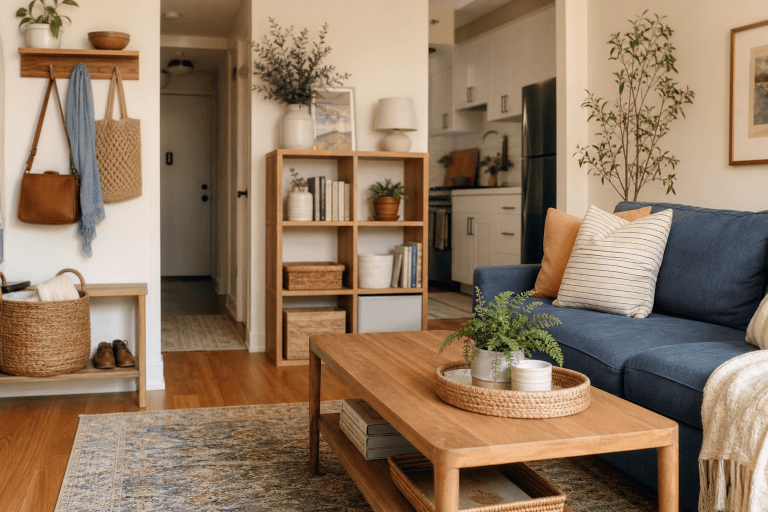
Living rooms are shared rooms, so they collect everything. Trying to prevent all clutter may be unrealistic. A better move is to give common clutter a place close to where it appears.
First, name the room’s real uses: relaxing, TV, reading, games, toys, work, exercise, hobbies, guests, or dining. Do not list the ideal uses. List the actual ones.
Clear the coffee table and side tables. Put items that belong elsewhere into a basket and return them after the session. Then group what remains by activity.
Remote controls need one small home. Blankets need a basket or shelf. Toys need a container that is easy to use. Work supplies need a box, drawer, or bag that can close. Hobby items need a limit, not a permanent spread across the room.
Closed storage can calm a busy living room, but only if categories are clear. A large basket labeled vaguely in your head as “stuff” will fill with everything.
Bedroom: Lower The End-Of-Day Effort
A bedroom organization plan should respect tired people. If a system only works when someone has extra energy, it will not hold.
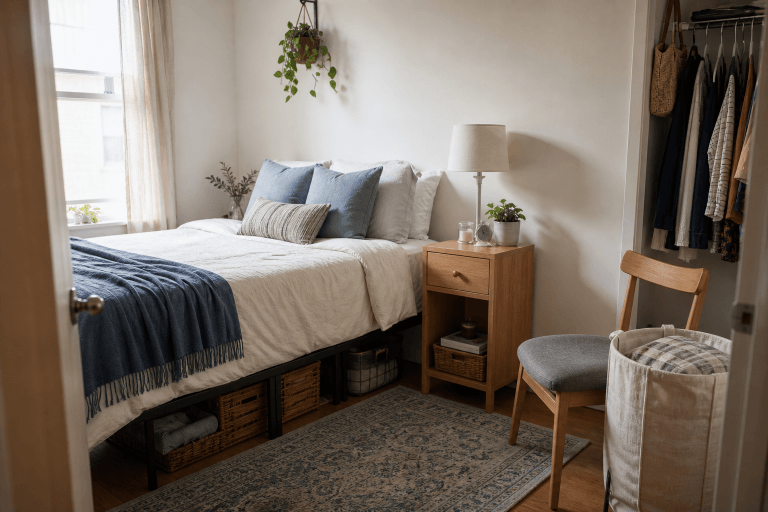
Begin with visible areas: floor, bed, chair, nightstand, dresser top. Do not start by emptying the entire closet unless there is time to finish.
Create a clothing path:
- clean clothes go to drawers, shelves, or hangers
- dirty clothes go to the hamper
- rewear clothes get one small defined place
That third category prevents the chair from becoming a second closet. It can be a hook, basket, or closet section. Keep it small enough that it needs regular attention.
The nightstand should support bedtime and morning, not store the whole day. Keep the current book, water, glasses, charger, lamp, tissues, or one small dish. Move extra books, papers, cups, and random items out.
The bed should be easy to make on an ordinary morning. If extra pillows and blankets always end up on the floor, they are adding work.
Bathroom: Reduce Open Products
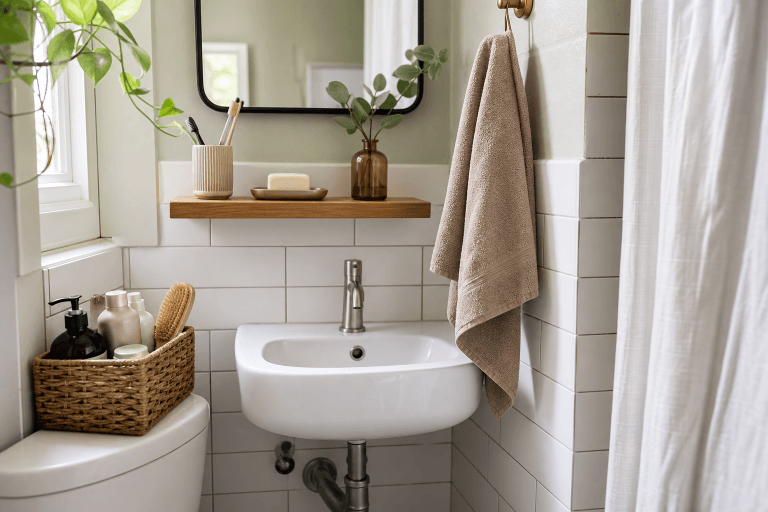
Bathrooms are small, and clutter there often comes from duplicates. Half-used bottles, almost-empty products, backups, samples, and items that did not work can crowd the sink and shower.
Start with the sink area, shower ledge, and most-used drawer or cabinet. Remove empty containers and products you no longer use. Check labels for storage and dates where relevant, especially for personal care items.
Group what remains by routine:
- morning
- night
- shower
- hair
- backup supplies
- cleaning
Daily items should be easiest to reach. Backups can move away from the counter. If the bathroom is shared, give each person a small contained area instead of letting everyone’s products blend together.
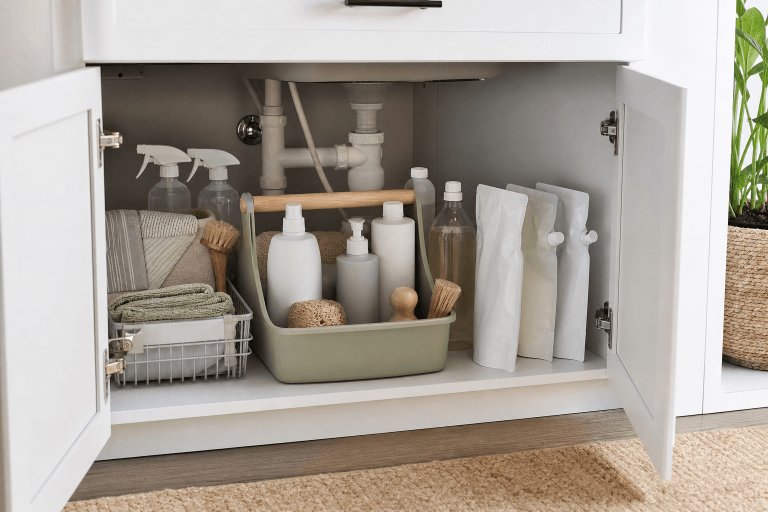
Store cleaning supplies according to label directions. Keep them separate from personal care items where practical, avoid mixing products, and do not build unstable stacks under the sink.
Closets: Organize By How Often Things Are Used
Closets in small homes carry more than one job. A single closet may hold coats, luggage, tools, linens, holiday items, cleaning supplies, and overflow from several rooms. Sorting by category helps, but sorting by frequency helps even more.
Use the easiest shelves, rods, and bins for items used weekly. Put occasional items on higher shelves, in deeper corners, or in labeled boxes.
Work in sections:
- Remove trash, empty boxes, and obvious donations.
- Pull out items that belong in other rooms.
- Group what remains by category.
- Put frequent items within easy reach.
- Label closed containers if the contents are not obvious.
Do not aim for a perfect closet photo. A closet works when one item can come out without five others falling or shifting.
If it still feels crowded, reduce the largest category. Coats, shoes, linens, and storage boxes often create more pressure than small items.
Work Corner: Keep The Job From Taking The Room
A home office does not have to be a separate room to be organized. It does need a boundary.
Choose one work surface if possible. Keep current work tools close: laptop, charger, notebook, headphones, pen, or active papers. Store extra supplies away from the main surface.
Create one active paper tray. Not three. A single tray forces decisions sooner and keeps papers from spreading to the kitchen, sofa, and bedroom.
At the end of the work session, close the area enough that the room can return to home life. That may mean putting everything into a drawer, box, tote, or cabinet.
Cords should be gathered without blocking ventilation, straining plugs, or creating trip hazards. Keep power strips visible enough to inspect, and follow product instructions.
Laundry And Cleaning: Make Utility Items Boringly Easy
Laundry and cleaning supplies do not need a beautiful system. They need a reliable one.
Remove empty bottles, worn-out tools, duplicate sprays, old rags beyond a useful amount, broken baskets, and extra hangers. Then group supplies by task: laundry, bathroom cleaning, kitchen cleaning, floors, cloths, and refills.
Store products according to labels and away from food where practical. If children or pets live in the home, choose storage with that reality in mind. Avoid mixing cleaning products.
If laundry happens outside the apartment, use a portable setup: one hamper or bag, one place for detergent, and one place for clean laundry to land before it is put away. The return step matters. Laundry is not finished until it leaves the chair, sofa, or bed.
A Weekly Reset That Does Not Become A Deep Clean
Maintenance keeps organization from turning into another big project. Keep it short.
Once a week, walk the home in this order: entry, kitchen, living room, bedroom, bathroom. Spend only a few minutes in each area. Clear the obvious drift: shoes, mail, dishes, laundry, papers, misplaced items, and trash.
Use a belongs-elsewhere basket, but empty it before stopping. Otherwise it becomes a portable clutter drawer.
If one category appears every week, do not blame the whole home. Fix that category. Mail may need a tray near the door. Rewear clothes may need a hook. Cleaning cloths may need a better laundry path.
Small maintenance works because it looks for patterns, not perfection.
Mistakes Busy People Do Not Need
The first mistake is starting with the most overwhelming area. Begin with the place that interrupts daily life and can be improved quickly.
Another mistake is using systems with too many steps. A daily item behind a lid, inside a box, on a high shelf, behind another bin will probably stay out.
It is also common to buy matching containers for the whole home before sorting. Matching storage can look calm, but unclear categories will still drift.
Finally, do not expect one organizing weekend to solve a busy home permanently. Homes keep moving because people live in them. The plan needs resets built in.
Read Next For The Rooms That Need More Detail
- The Complete Decluttering Checklist for Apartments
- How to Organize a Small Bedroom Without Buying More Furniture
- Kitchen Storage Ideas for Small Homes and Rentals
- Small Space Living: A Practical Guide to Making a Tiny Home Feel Bigger