Room-by-Room
How to Organize a Small Bedroom Without Buying More Furniture
A practical small-bedroom organization guide using the furniture, closet space, drawers, and storage you already have.
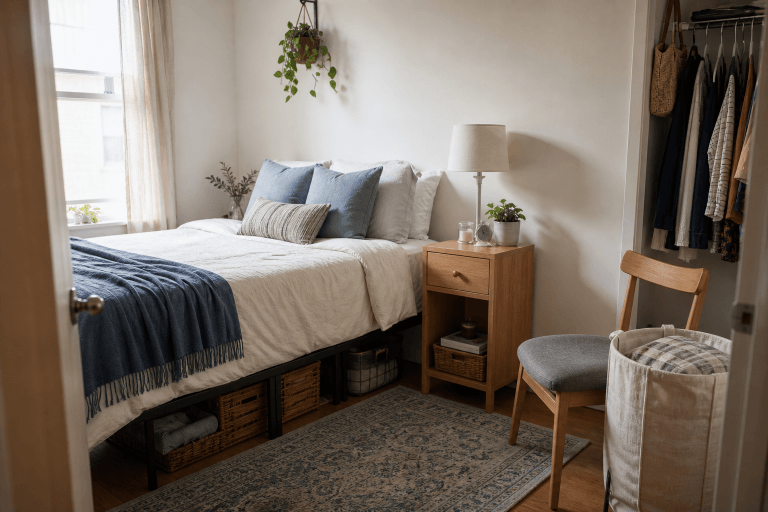
A small bedroom often looks as if it needs one more thing: a taller dresser, a bench with storage, a slimmer nightstand, a set of bins that promise to make the closet behave. Sometimes extra storage helps. More often, the room already has enough furniture and not enough decisions.
The chair is holding clothes because there is no place for half-worn clothes. The nightstand is crowded because every small object near the bed feels important at 11 p.m. The closet is hard to use because it stores old boxes, spare bedding, bags, and clothing from three different versions of daily life.
Before buying another piece of furniture, make the room easier to use with what is already there. Work from the outside in: floor, bed, chair, nightstand, drawers, closet. A small bedroom improves quickly when the main walking path clears and the first few surfaces stop acting like storage units.
First, Protect The Floor
In a small bedroom, floor clutter changes the whole room. A pair of shoes by the door, laundry beside the bed, a tote bag near the closet, and a package waiting for a return can make the room feel smaller than it is.
Start with the walking route. Stand at the bedroom door and trace the path to the bed, closet, dresser, and window. Anything sitting in that path has to earn its place.
Move these items first:
- laundry that belongs in a hamper
- shoes that can return to the entry or closet
- bags that were dropped after coming home
- boxes, returns, and packaging
- decor or baskets that make drawers harder to open
Do not empty the closet yet. Clear only what is visible and in the way. This keeps the project small enough to finish, which matters in a room where you still need to sleep tonight.
After the floor is clear, open every drawer and closet door that usually hits something. If the drawer cannot open fully because of a basket or pile, that item is not storage anymore. It is a daily obstacle.
Make The Bed Easier To Reset
The bed is the largest object in the room, so the whole bedroom takes its cue from it. A complicated bed can make a small room feel high-maintenance.
Strip the bed down to what you actually use. Keep the pillows that support sleep, the blanket or duvet you use most nights, and one extra layer if the room gets cold. Move decorative pillows, extra throws, and guest bedding out of the daily reset unless they are genuinely worth the effort.
Under-bed storage can be useful, but it should have a narrow job. Good categories include off-season clothing, spare sheets, guest linens, or sentimental items in a closed container. Poor categories include loose shoes, random papers, cables, old bags, or anything you need several times a week.
If you already use under-bed storage, pull out one container and check whether the label still matches the contents. If it takes more than a minute to remember what is inside, the system is probably too vague.
The bed area should pass one simple test: can you make the bed and walk beside it without moving a pile first?
The Chair Is Usually Telling The Truth
A bedroom chair covered in clothes is not a moral failure. It is usually a missing category.
Most clothing systems only give you two choices: clean or dirty. Real life has a third category: worn once, still usable, not ready to go back into the drawer. Without a home for that category, the chair gets the job.
Create a small rewear spot before you clear the chair. Choose one option:
- one hook behind the door, if allowed
- one hanger at the end of the closet rod
- one open basket
- one drawer corner for soft items
- one rail or hook already in the room
Keep it deliberately small. A rewear spot is a pause, not a second closet.
Then empty the chair one item at a time. Dirty clothes go to the hamper. Clean clothes go fully away. Rewear clothes go to the new spot. Items that are not clothing leave the bedroom if they belong elsewhere.
If the chair fills again within a few days, the first fix is usually location. Move the hamper closer. Put the hook where clothes are actually dropped. Do not punish the room with a more complicated system when a two-foot move would solve most of the problem.
Stop Letting The Nightstand Store The Whole Day
A nightstand should support bedtime and morning, not hold everything that has no other home.
Clear the top completely. Put back only the things used while in bed or immediately after waking: a lamp, water, glasses, phone charger, current book, tissues, lip balm, or one small dish for jewelry. That is already plenty.
Move out the common drifters: old receipts, mail, extra books, empty cups, hair ties, skincare backups, cables for devices you do not charge there, and anything that belongs to work.
If your nightstand has a drawer, divide it by routine rather than by item type. The front area should hold nightly items. The back can hold backup tissues, a notebook, or the next book if you actually read in bed. If there is no drawer, use one small tray and treat its edge as the limit.
Books deserve a note because they pile up quietly. Keep one current book and maybe one next book. A tower of possible reading can feel like clutter even when every book is good.
Drawers Before Dividers
Drawer dividers are not the first step. The first step is making each drawer less confused.
Work on one drawer at a time. Empty it onto the bed or floor, then sort quickly:
- keep in this drawer
- move to another bedroom spot
- laundry
- donate or discard
- unsure
Do not make a large unsure pile. Use a small bag or box and review it later. Otherwise, uncertainty becomes its own storage category.
Give each drawer a broad job. Socks and underwear can share a drawer if they have clear sections. Workout clothes may need their own drawer if they are used often. Sleepwear should not be buried under off-season sweaters if you reach for it every night.
Use what you already own as temporary dividers: shoeboxes, small cardboard boxes, fabric pouches, gift boxes, or folded cloth bags. If the drawer works for two weeks, then you know what kind of permanent divider might be worth buying later.
Leave a little slack. A drawer packed to the top looks efficient for one day and becomes annoying the moment laundry comes back.
The Closet Needs Prime Space For Current Life
Small-bedroom closets often carry too much history. Clothes from a previous job. Shoes for events that rarely happen. Empty shopping bags. Bedding. Luggage. Donation items that never left.
Do not empty the whole closet unless you have time to finish. Start with the easiest visible layer: floor, shelf, or hanging section.
Remove anything that clearly does not belong in the active closet:
- empty packaging
- damaged hangers
- bags filled with forgotten items
- returns and donations
- old paperwork
- decor waiting for a place
- clothes that need repair and have waited too long
Then separate clothing by how often it is worn now. Current-season everyday items get the easiest reach. Occasional pieces can move higher, lower, or farther back. Off-season clothing should not compete with what you wear this week.
A closet does not have to be color-coded to work. It needs to let you choose clothes without digging, knocking things down, or closing the door quickly because the contents feel stressful.
If the closet rod is packed, reduce by category rather than by emotion. Pull only jeans, only sweaters, only work shirts, or only shoes. Smaller decisions are less draining.
Small Storage Moves That Do Not Add Furniture
Once the room is edited, a few small supports can make the system easier without adding another big piece.
Use the back of the door for one clear purpose, such as a robe, tomorrow’s outfit, or a light bag. If you rent, check your lease and avoid overloading door hardware.
Use the inside of a closet door only when it will not block closing. Slim organizers can help with scarves, belts, or accessories, but bulky pockets can make a closet more irritating.
Move charging cables to the exact place devices are charged. Use simple cord ties where they do not strain plugs or create trip hazards. Keep power strips visible enough to check, and follow the manufacturer’s directions.
Repurpose containers before buying new ones. A small box inside a drawer can solve socks. A shallow basket can hold rewear clothes. A spare tray can reset the nightstand.
The useful question is not, “Where can I add storage?” It is, “Which daily action needs less friction?”
A Twenty-Minute Bedroom Reset
Use this when the room feels bad but you do not have the energy for a full project.
Start with laundry. Put dirty clothes in the hamper, clean clothes away, and rewear clothes in the one spot you chose. Then clear the bed so it can be made. Move cups and dishes out. Reset the nightstand. Pick up only the floor items in the walking path.
Stop there if needed. The room will already feel more usable.
If you have another ten minutes, choose one drawer or one closet section. Do not open more than you can finish. A small bedroom can look worse very quickly when every storage area is opened at once.
Mistakes That Keep A Small Bedroom Messy
The first mistake is buying a larger dresser before reducing clothing. More drawers may delay the problem instead of solving it.
Another mistake is using under-bed space for loose storage. If items are not contained, they become hard to clean around and easy to forget.
It is also common to organize for an ideal routine. If you will not fold everything perfectly every week, choose a simpler drawer setup. Good organization should lower the amount of effort required on an ordinary night.
Finally, do not ignore the halfway category for clothes. A bedroom chair usually returns because the system has nowhere for real-life clothing to pause.
Read Next When The Bedroom Is Only Part Of The Problem
- Small Space Living: A Practical Guide to Making a Tiny Home Feel Bigger
- The Complete Decluttering Checklist for Apartments
- Under-Bed Storage Ideas That Do Not Turn Into Hidden Clutter
- Nightstand Organization for Small Bedrooms