Decluttering
The Complete Decluttering Checklist for Apartments
A practical apartment decluttering checklist for small homes, rentals, studios, and rooms that feel crowded or hard to reset.
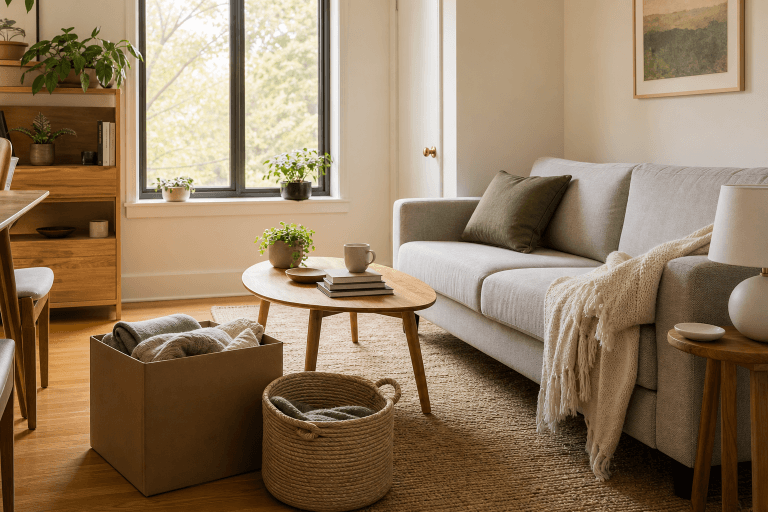
Decluttering an apartment is different from decluttering a larger house. There is less overflow space, fewer closets that can absorb delayed decisions, and usually no garage, basement, or attic waiting politely in the background. A small home shows clutter quickly.
That can be irritating, but it can also make the work clearer. When shoes block the door, the entry needs attention. When food containers fall out of the cabinet, the kitchen has too many or the wrong ones. When the closet door will not close without a shove, something inside is asking for a decision.
Use this checklist as a slow room-by-room pass. It is not a challenge to own as little as possible. It is a way to remove the things that make an apartment harder to cook in, sleep in, clean, and reset.
Set Up A Small Exit Plan
Before opening drawers, decide where things will go when they leave the apartment. Otherwise decluttering just creates new piles.
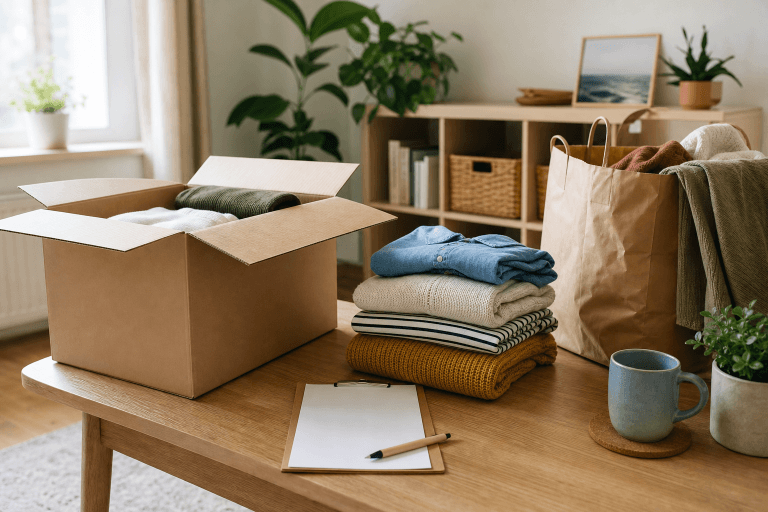
Set out four containers or bags:
- trash or recycling
- donations
- items that belong elsewhere
- decide-later items
Keep the decide-later container small. One box is enough. If every difficult item gets its own pile, the apartment becomes a storage unit for unfinished decisions.
Work in short sessions. Twenty or thirty minutes is enough for one drawer, one shelf, or one counter. Stop while there is still time to carry trash out, put donations near the door, and return the items that are staying.
Do not buy organizers first. Decluttering usually changes what kind of storage is needed.
Entryway: Clear The First Five Feet
The entry affects how the whole apartment feels because it is the first place clutter gets dropped. Shoes, keys, mail, packages, umbrellas, and reusable bags can crowd a small doorway fast.
Remove anything near the entrance that is not part of the current week. Keep the shoes that are being worn now. Move special-occasion shoes, off-season shoes, and extra bags to a closet or another storage area.
Declutter these common entry items:
- broken umbrellas
- old receipts
- empty delivery boxes
- mail that needs recycling
- reusable bags beyond the number you actually carry
- accessories with no current use
- returns that need an exit date
After clearing, give the entry three jobs: keys, current shoes, and outgoing items. That may be a hook, a tray, and a small shoe area. Keep it simple. A crowded entry system is still a crowded entry.
Living Room: Remove The Stuff That Belongs To Other Rooms
Living rooms collect clutter because they do so many jobs. They hold relaxing, eating, working, hobbies, guests, television, toys, exercise gear, and sometimes storage overflow from the rest of the apartment.
Begin by walking the room with a basket for items that belong elsewhere. Do not organize them yet. Just collect the bathroom items, kitchen cups, bedroom clothes, paperwork, chargers, and random objects that drifted in.
Then clear the main surfaces: coffee table, side tables, media console, windowsill, and any chair that has become storage.
Look closely at hidden storage too. Ottomans, TV cabinets, and decorative baskets often hold the remains of fast cleanups. Empty one at a time and remove:
- remotes for devices you no longer own
- old magazines and catalogs
- cords with no matching device
- games or puzzles with missing parts
- decor you no longer enjoy
- blankets that are worn out or never used
- pillows that spend more time on the floor than on the sofa
Put back only the categories the living room actually supports. If hobbies happen there, give hobby items a container. If work happens there, create one small work box that can close at the end of the day.
Kitchen: Keep Space For Cooking, Not Someday
The kitchen is where “maybe useful” items become expensive. Every duplicate tool and rarely used appliance takes space from daily cooking.
Start with the counter. Remove anything not used daily or not tied to food prep, cooking, or dishwashing. If the kitchen has one small prep area, protect it before touching the cabinets.
Then work by category:
- duplicate utensils
- chipped mugs and plates
- containers without lids
- lids without containers
- takeout packets beyond a small amount
- expired pantry items
- spices that no longer smell like much
- appliances used rarely enough to lose counter space
- cleaning products that duplicate the same job
Food storage containers deserve their own pass. Match every lid to a base. Choose a limit, such as one drawer or one shelf. If the category does not fit, reduce it before adding another bin.
Pantry items should be grouped by how you cook: breakfast, snacks, grains, cans, baking, sauces. Store backups behind or above the current item so you can see what is already open.
Bathroom: Finish Products Or Let Them Go
Bathrooms collect small decisions. A bottle is almost empty, but not quite. A product did not work well, but throwing it away feels wasteful. Travel sizes wait for future trips. Soon the sink area has no room left.
Start with the sink, shower ledge, and most-used cabinet. Remove empty containers, expired items, and products you know you avoid. For anything applied to skin or hair, use your own judgment and check labels for dates, storage, and safety information.
Declutter:
- empty bottles
- products that irritated you or never fit your routine
- old toothbrushes beyond a small cleaning-use limit
- makeup or grooming items no longer used
- towels too worn for daily use
- duplicate products opened at the same time
- travel items you keep skipping
Put daily items back by routine: morning, night, shower, hair, and backup supplies. Backups do not need counter space. If the bathroom is shared, keep each person’s daily items contained enough that the sink can still be wiped.
Cleaning products should follow label directions, stay separate from personal care items where practical, and never be mixed.
Bedroom: Start With The Visible Stress
Bedroom clutter often comes from tired decisions. Clothes land on a chair, books collect beside the bed, laundry waits on the floor, and the dresser top becomes a parking lot for small things.
Clear the visible areas before opening the closet. Work in this order: floor, bed, chair, nightstand, dresser top. The room will feel better quickly, and you will not be sleeping beside half-empty closet piles.
Declutter:
- clothing that no longer fits current life
- items that need repair but have waited too long
- uncomfortable sleepwear
- worn socks or undergarments
- extra bedding that is not used
- books stacked without a real plan
- old paperwork
- loose items under the bed
Create one place for clothes that can be worn again. Without that middle category, the chair usually takes over.
When you move into drawers and the closet, sort by current use. The easiest space should hold clothes worn now, not the most sentimental or least-used pieces.
Closets: Do Not Empty The Whole Thing Unless You Can Finish
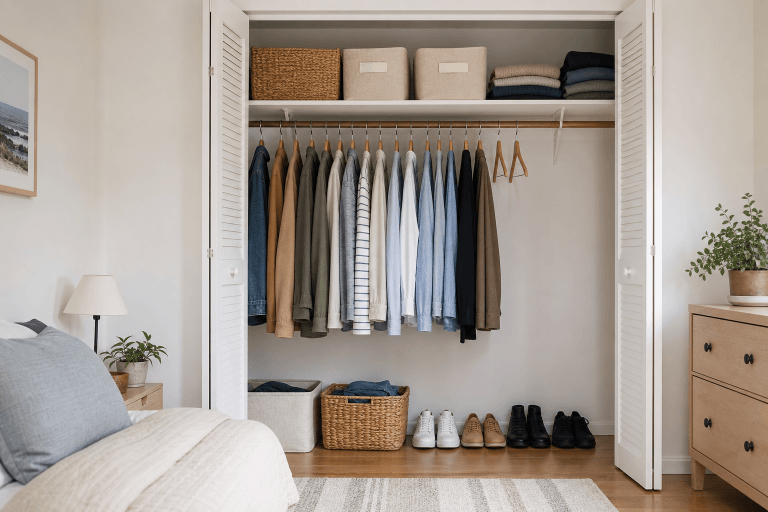
Apartment closets often hold a mix of clothing, tools, decor, luggage, linens, and the things nobody wanted to decide about. Emptying the entire closet can turn one problem into a full-room mess.
Choose one section: floor, top shelf, hanging rod, or one stack of bins. Remove trash and obvious donations first. Then pull out items that belong elsewhere.
Common closet clutter includes:
- empty boxes saved “just in case”
- bags filled with forgotten items
- duplicate linens
- old electronics
- decor kept out of guilt
- clothes from a past job or size
- luggage used as random storage
- seasonal items that are no longer used
Put frequent items at eye level and within easy reach. Use high shelves and deep corners for occasional categories. Label closed boxes only when labels will help future you find something faster.
The closet is working when you can remove one item without disturbing several others.
Paper, Cables, And Small Office Clutter
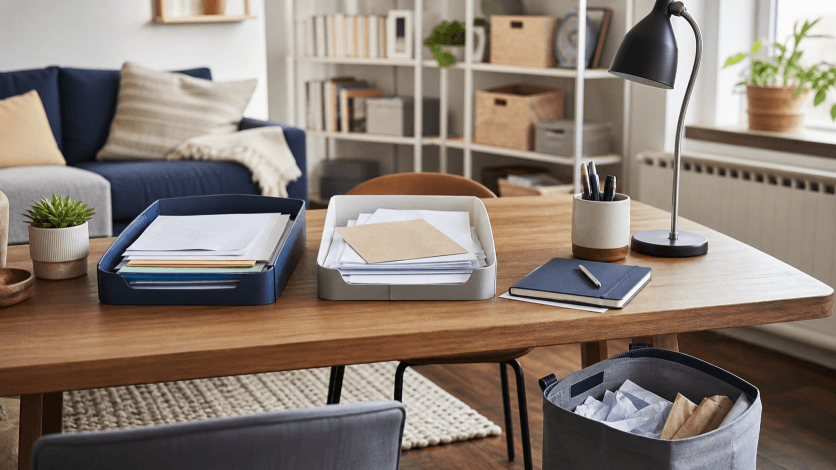
Paper clutter makes a small apartment feel unfinished even when the rest of the home is calm. The fix is not a perfect filing system. It is a short decision path.
Collect mail, receipts, old envelopes, manuals, notebooks, shipping labels, and loose paper from around the apartment. Make three active spots: action needed, to file, and recycle or shred. Keep each spot small and visible.
Manuals available online can often go, unless you prefer keeping paper copies. Receipts depend on your needs, return windows, warranties, and household records, so sort them honestly rather than automatically saving all of them.
Cables need the same treatment. Match chargers to current devices. Remove cords you cannot identify after a reasonable check. Keep cables gathered without straining plugs, blocking ventilation, or creating trip hazards.
Laundry And Cleaning Supplies
Laundry and cleaning areas may be tiny in an apartment, but they need limits. Empty bottles, worn-out tools, extra hangers, and duplicate sprays can crowd the space quickly.
Declutter:
- empty detergent bottles
- products no longer used
- tools with worn-out heads
- single socks that have waited too long
- old rags beyond a useful amount
- extra hangers
- broken baskets
Group supplies by use and keep them away from food and personal care items where practical. Follow product labels for storage and ventilation. Avoid unstable stacks under sinks or on high shelves.
If the laundry area is shared or outside the apartment, keep supplies in a portable container that can be lifted easily and returned to one place.
The Final Walkthrough
When each area has had a pass, walk through the apartment from the front door. Look for the four things that make small homes feel crowded fastest: blocked paths, overfilled surfaces, homeless daily items, and bags waiting to leave.
Ask:
- Can the main path be walked without stepping around storage?
- Does each daily item have an obvious home?
- Are counters and tables holding current items, not old decisions?
- Are donation, trash, recycling, and return items actually leaving?
- Does each storage area have a little room to move?
Take outgoing items out as soon as practical. A donation bag left by the door for three weeks becomes clutter again.
Mistakes That Make Decluttering Take Longer
The first mistake is trying to declutter the whole apartment in one dramatic day. Some people like that pace, but many small homes become harder to live in halfway through. Smaller sections are easier to finish.
Another mistake is creating too many “maybe” piles. Use one limited box and review it later.
It is also easy to organize before removing excess. Neatly arranged clutter still takes space.
Finally, do not skip the exit plan. Decluttering is not finished until the unwanted items leave the apartment or move to the right place.
Read Next For Smaller Problem Areas
- What to Declutter First When Your Whole Apartment Feels Overwhelming
- How to Organize a Small Bedroom Without Buying More Furniture
- Kitchen Storage Ideas for Small Homes and Rentals
- A Room-by-Room Home Organization Plan for Busy People