Decluttering
How to Declutter a Closet When You Have Very Little Storage
A practical closet decluttering method for small apartments where every hanger, shelf, drawer, and bin has to work hard.
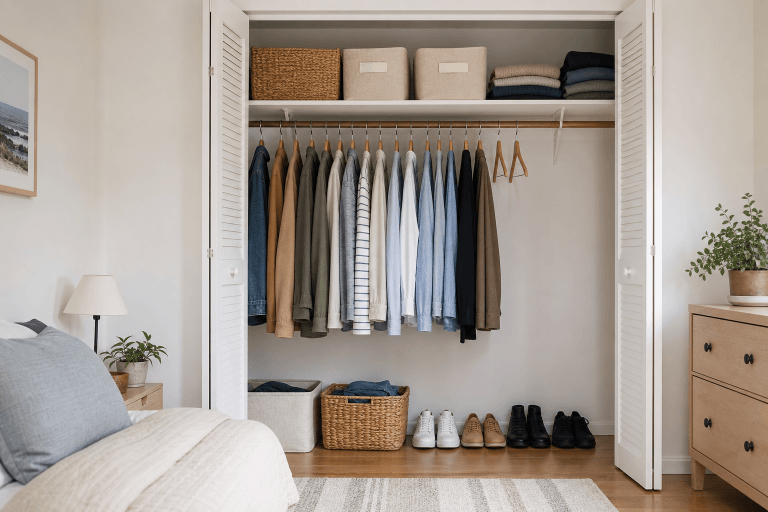
A small closet does not forgive vague storage. One bag of old clothes, one stack of extra bedding, one box of papers, and suddenly the closet stops doing its main job. The door sticks. Hangers jam together. Shoes disappear under coats. Getting dressed becomes a small excavation.
Decluttering a closet with very little storage is not about becoming ruthless with everything. It is about protecting the easiest space for the items used now. The closet should serve current life first.
Work In Sections, Not In A Heap
Emptying the entire closet can look productive for ten minutes and then become a room-wide problem. If storage is limited, work in sections that can be finished.
Choose one area:
- the closet floor
- the hanging rod
- one shelf
- one drawer
- one stack of boxes
- one category, such as shoes or sweaters
Pull out only that section. Clean the empty space. Then decide what returns before opening another area.
This pace matters because closets often hold delayed decisions. A smaller section keeps the work from becoming emotionally and physically too large.
Remove The Obvious Non-Closet Items
Start with things that clearly do not need prime closet space. These decisions are usually easier than clothing.
Look for empty boxes, old shopping bags, broken hangers, packaging, returns, donation bags, random cords, decor waiting for a home, paperwork, and items that belong in the kitchen, bathroom, or entry.
If the closet has become general apartment storage, create a “belongs elsewhere” basket and move those items out after the session. Do not let the basket sit for days. It is a transfer tool, not a new storage system.
Give The Best Space To Current Clothing
The most reachable part of the closet should hold clothing worn in the current season and current routine. Not the clothes that might fit later, not old workwear from a different job, not special-occasion pieces used once a year.
Make three clothing groups:
- current and worn
- occasional but still useful
- not serving current life
Current clothing gets the central rod, easiest shelf, or best drawer. Occasional pieces can move to a higher shelf, garment bag, under-bed container, or less convenient section. Items that no longer fit current life need a decision: donate, sell, repair, store with a clear reason, or let go.
Avoid creating a large “maybe” zone inside the closet. Maybe items are allowed, but only in one limited container with a review date.
Reduce The Category That Takes The Most Space
When a closet is packed, tiny edits may not change much. Choose the largest pressure category and deal with it directly.
For many closets, that category is coats, shoes, jeans, sweaters, bags, or linens. Pull out the whole category and compare items side by side. It is easier to see duplicates and weak choices when the category is together.
Ask practical questions:
- Do I wear this in my current week or season?
- Is it comfortable enough that I actually choose it?
- Does it need repair, and will that repair happen soon?
- Do I own another item that does the same job better?
- Is this worth the easiest closet space?
Keep the best version of repeated items. Store off-season pieces away from daily clothing. Remove the items that only stay because they have been there a long time.
Make Hangers And Shelves Easier To Use
A closet can be decluttered and still feel annoying if everything is packed too tightly. Leave enough space for hangers to move. If clothing cannot slide, you will stop looking and start wearing the same few items from the front.
Use matching hangers only if you already have them or truly need the visual calm. Matching hangers are not required. Removing excess usually makes a bigger difference.
Shelves work best with broad categories. Folded sweaters, bags, linens, or boxes can each have a section. Avoid stacking too high. Tall stacks fall, and fallen stacks stop being storage.
If shelf items are small, use one container to group them. The container should pull out easily and have a label if the contents are not obvious.
Store Shoes By Frequency
Shoes are often split between entry and closet. Keep daily shoes near the door if that is where they are removed, but limit the number. The closet can hold less-used pairs, seasonal shoes, or special shoes.
Do not let shoe boxes take over unless they truly help. Boxes can protect shoes, but they can also hide what you own. Clear boxes or simple labels help if you prefer boxed storage.
If the closet floor is the only shoe area, keep it shallow. A deep pile of shoes makes cleaning hard and hides pairs at the back.
Handle Sentimental And Future Items Gently
Small closets often hold clothes connected to memories, older sizes, former jobs, or imagined routines. These items may not belong in the daily closet, even if they are worth keeping.
Create one memory or archive container if needed. Label it clearly and store it away from active clothing. This lets you keep meaningful items without making every morning harder.
Future items need stricter limits. If something is being saved for a possible life, it should not crowd the life happening now.
A Quick Maintenance Pass
Once a month, scan the closet for drift. Remove empty hangers, return shoes to pairs, move donations out, refold one messy stack, and pull any non-closet items that wandered in.
If the same problem returns, fix the category. If bags keep falling, give bags a better section. If laundry waits on the closet floor, the hamper may be in the wrong place.
Continue With These Guides
- How to Organize a Small Bedroom Without Buying More Furniture
- Under-Bed Storage Ideas That Do Not Turn Into Hidden Clutter
- The Complete Decluttering Checklist for Apartments