Decluttering
How to Declutter Paperwork in a Small Apartment
A simple apartment paperwork system for sorting mail, receipts, documents, and papers before they take over counters.
Paper clutter feels larger in a small apartment because it spreads thinly. A few envelopes by the door, receipts on the kitchen counter, manuals in a drawer, school papers on the table, and old mail beside the sofa can make the whole home feel unfinished.
The answer is not a complicated filing cabinet. Most apartments need a short paper path: enter, decide, act, file, recycle, or shred. The shorter the path, the less likely paper is to settle on every surface.
Collect Paper From The Whole Apartment
Start with a sweep, not a filing session. Walk through the entry, kitchen, living room, bedroom, work area, and bags. Collect mail, receipts, envelopes, notes, manuals, documents, shipping labels, coupons, and papers that have been waiting for a decision.
Put everything on one clear surface. If the pile is large, work in small stacks. Do not spread paper across the floor unless you can finish before the room needs to be used again.
Throw away or recycle obvious junk first: empty envelopes, expired flyers, duplicate catalogs, packaging slips you do not need, and blank scraps.
For sensitive papers, use your usual shredding or secure disposal method.
Make Four Active Categories
Paper gets messy when every page feels different. Use four working categories:
- action needed
- to file
- to scan or save digitally
- recycle or shred
Action needed includes bills, forms, returns, appointment notes, school papers, or anything requiring a response. To file includes documents you need to keep. Scan or save digitally is for papers where a digital copy is enough for your needs. Recycle or shred is everything leaving.
Avoid a broad “later” pile. Later is how paper returns to the counter.
Keep The Action Pile Small And Visible
The action pile should not live in a deep box. It needs to be visible enough that it bothers you a little, but contained enough that it does not spread.
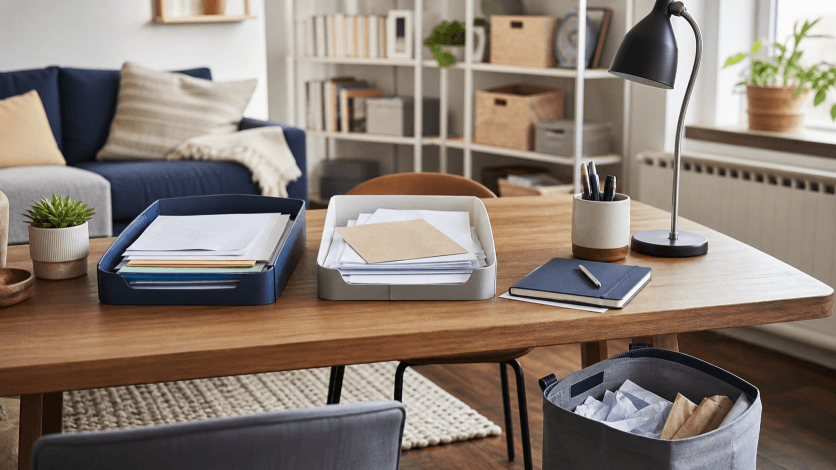
Use one tray, folder, clipboard, or wall pocket. Keep it near the place where paperwork actually gets handled, not where an ideal person would handle it.
Set a regular paper time. Ten minutes once or twice a week can be enough for many households. Open mail, pay or schedule what needs attention, recycle junk, and move finished documents out of the action tray.
Be Selective With Filing
Not every paper deserves permanent storage. Keep documents that matter for household records, warranties, taxes, leases, insurance, medical or school needs, or personal records according to your own requirements. This article is not legal or financial advice; when rules matter, use the official source or a qualified professional.
For ordinary home papers, ask:
- Will I need this specific paper again?
- Is the information available online?
- Is a photo or digital copy enough for my household?
- Does it belong with a product, lease, school, or tax record?
Use broad file categories. Too many narrow folders make filing slower. A small apartment system may only need household, rental, tax, medical, school, warranties, and current projects.
Give Mail A Landing Spot Near Entry
Mail should not have to travel through the apartment before being sorted. Place a small tray, folder, or basket near the entry or wherever mail is opened.
Keep the landing spot shallow. A deep basket hides paper until it becomes a project. A shallow tray shows when it is time to decide.
When mail comes in, remove junk quickly. Put action items in the action tray. File only what is truly ready to file. Move outgoing mail or returns to a separate spot by the door.
Receipts Need Rules
Receipts multiply because they are small and easy to ignore. Decide which ones you keep and where they go.
You may keep receipts for returns, reimbursements, warranties, budgeting, or tax records depending on your situation. Put short-term receipts in one envelope or small box and clear it regularly. Long-term receipts should join the appropriate file.
Do not let every receipt become a permanent document. If it has no purpose, let it leave.
Manuals, Notes, And Random Papers
Many product manuals are available online, but keep paper copies when you prefer them or when they are genuinely useful. Store manuals together, not in five drawers.
Notes and notebooks need a review. Tear out pages worth keeping, move tasks to the place you manage tasks, and recycle pages that no longer matter.
Coupons and flyers need expiration checks. If they are not likely to be used, they are not saving money; they are taking space.
Keep Paper Off The Kitchen Counter
If paper always lands in the kitchen, do not pretend it will stop. Put a paper tray there or closer to the entry, then make it part of the weekly reset.
The kitchen counter is expensive space in a small apartment. Paper can visit, but it should not live there.
Related Guides
- The Complete Decluttering Checklist for Apartments
- How to Organize a Small Home Office in a Shared Room
- Small Entryway Storage Ideas for Apartments Without Mudrooms