Room-by-Room
How to Organize a Small Home Office in a Shared Room
Create a focused home office area in a bedroom, living room, or dining space without letting work take over the room.
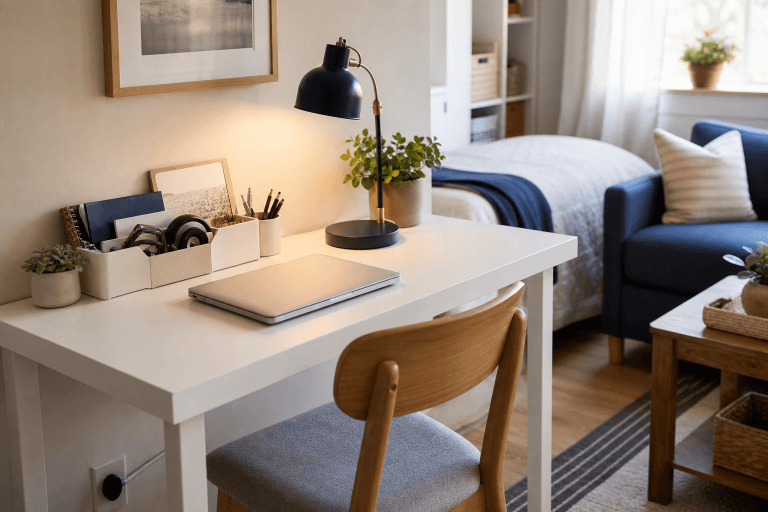
A home office in a shared room has two jobs. It has to support work, and it has to disappear enough that the room can still be a bedroom, living room, dining area, or guest space.
The mistake is treating a work corner like a miniature corporate office. A small home rarely has room for every file, supply, device, and backup cable at arm’s reach. The better setup keeps active work close and everything else contained.
Decide What Has To Stay At The Desk
Start with the work that happens most days. Laptop, charger, notebook, headphones, pen, current papers, planner, keyboard, mouse, or task lamp may need desk space. Extra notebooks, old documents, spare supplies, and rarely used equipment probably do not.
Clear the work surface and put back only active items. If the desk is also a dining table or bedroom surface, reduce the active list even further.
The desk should be easy to reset at the end of the day. If closing work requires moving twenty objects, the office is asking too much from the room.
Create A Work Kit
A work kit is one container that holds the items needed to start work and close work. It can be a drawer, tote, box, rolling cart, cabinet shelf, or laptop bag.
Good work-kit items include a charger, notebook, headphones, pens, current folder, sticky notes, and small office supplies. Avoid letting the kit become an archive. It is for current work, not every paper from the last year.
If work happens at the dining table, the kit matters even more. It lets the table switch back to meals without piles migrating to the sofa.
Give Paper A Narrow System
Paper spreads quickly in shared rooms. Use one active tray or folder for current papers. Keep long-term files somewhere else.
Sort papers into action, reference, file, and recycle or shred. Action stays visible. Reference can live in the work kit if it is used often. Files go to a folder or box outside the daily surface.
Do not keep every paper at the desk because it is related to work. A desk crowded with old paper makes current work harder.
Manage Cords Without Creating A Hazard
Cords are part of most home offices, but they should not cross walking paths or strain plugs. Use simple ties, clips, sleeves, or channels where appropriate. Keep power strips visible enough to check and follow product instructions.
Avoid forcing cords behind heavy furniture where they cannot be inspected. Avoid covering power strips or adapters with fabric, rugs, or paper.
If outlets are far from the desk, consider whether the desk location is worth the cord problem. Sometimes moving the desk a few feet does more than any cable organizer.
Use Vertical Storage Lightly
A small shelf, wall pocket, peg area, or nearby bookcase can help if the lease and wall surface allow it. Use vertical storage for lightweight, active items: headphones, a notebook, small supplies, or a calendar.
Do not move the entire office onto the wall. Too many visible papers and tools can make a bedroom or living room feel like work never ends.
Closed storage is often calmer in a shared room. A cabinet, lidded box, or drawer can help the room switch roles.
Protect The Other Use Of The Room
If the office is in a bedroom, keep work from spreading to the bed and nightstand. If it is in the living room, keep work supplies from taking over the coffee table. If it is in the dining area, make the table clearable before meals.
Give the shared room a closing cue. Turn off the task lamp, close the laptop, put papers in the tray, and move the work kit to its place. The cue matters because the room has to change identity.
Choose A Desk That Fits The Routine
A tiny desk is not always better. It may leave no room for actual work. A large desk is not always better either. It may invite piles.
Measure the room and the work. A laptop-only job may need a narrow desk. Paper-heavy work may need a surface plus file storage nearby. If the desk blocks a closet, window, or walking path, it will irritate the room every day.
Before buying, test with a table or taped footprint. Sit, pull out the chair, open nearby doors, and walk around it.
Shared-House Considerations
In shared homes, make the work setup understandable to other people. Label shared supplies. Keep confidential or personal papers contained. Avoid spreading work into common surfaces without an end time.
If more than one person works from home, each person needs a defined storage spot, even if the desk is shared.
That spot does not need to be large. A folder, shelf section, or portable box can be enough if it is used consistently.
Keep Working Without Taking Over
- A Room-by-Room Home Organization Plan for Busy People
- How to Declutter Paperwork in a Small Apartment
- Small Apartment Layout Ideas for Better Flow