Room-by-Room
How to Organize Cleaning Supplies in a Small Home
Keep cleaning products, cloths, tools, and refills organized when you do not have a utility closet.
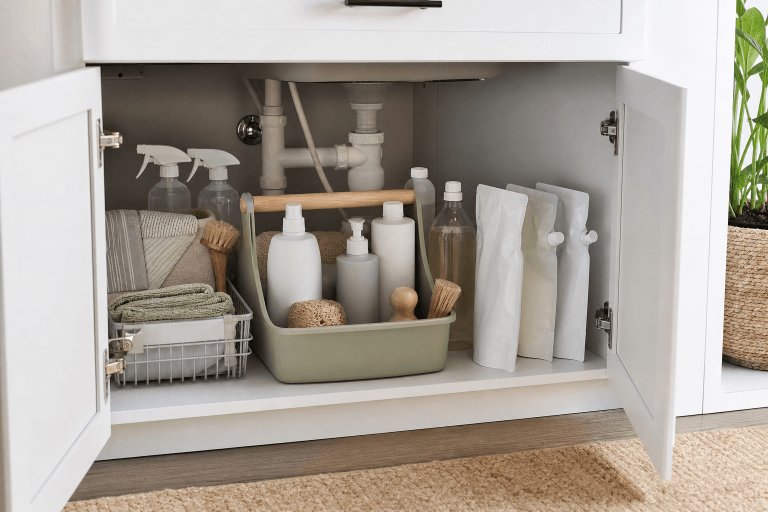
Cleaning supplies get messy in small homes because they do not always have a room of their own. Bottles end up under the kitchen sink, cloths in the bathroom, mop heads in a closet, refills on a shelf, and sprays wherever they were last used.
The aim is a clear, cautious system: products stored according to labels, tools easy to reach, and supplies separated from food and personal care items where practical. This article is about organization, not chemical safety advice. Always follow product labels and avoid mixing cleaning products.
Gather Before You Sort
Collect cleaning supplies from the kitchen, bathroom, laundry area, closets, and entry. Bring them to one surface if you can do that safely and without blocking the home.
Remove obvious clutter: empty bottles, dried-out wipes, broken tools, worn-out sponges, duplicate products you do not use, and packaging that can be recycled.
Do not combine products unless the label specifically allows it. Do not pour unknown products together. If you are unsure what something is, handle it cautiously and follow local disposal guidance where needed.
Choose One Main Supply Area
A small home may not have a utility closet, but it can still have a main cleaning zone. Choose under the sink, a laundry shelf, a cabinet, a closet bin, or a portable caddy.
The area should be away from food when possible, practical for your household, and easy to check. If children or pets live in the home, storage location matters more than appearance.
Keep daily or weekly supplies easiest to reach. Backups can go behind or above current items, but they should not multiply across the apartment.
Use A Caddy For Active Cleaning
A caddy works well when supplies are used in several rooms. Keep it limited to the products and tools used most often: cloths, a brush, gloves if used, and one or two regular cleaners that match your routine.
The caddy should be light enough to carry and easy to return. If it becomes too heavy, people will stop using it.
Store specialty products outside the active caddy unless they are used often. The active kit should make cleaning easier, not carry the whole supply closet.
Separate Cloths, Sponges, And Refills
Small cleaning items scatter easily. Give cloths, sponges, scrub brushes, mop pads, and refills their own containers or shelf sections.
Let damp items dry before closing them into storage. Keep clean cloths separate from used cloths. If laundry is nearby, create a small landing spot for used cleaning cloths so they do not sit on counters.
Backstock should be visible enough to prevent overbuying. If refills hide behind bottles, you may buy more while already having plenty.
Store Tall Tools Without Blocking Paths
Brooms, mops, dusters, vacuums, and folding buckets are awkward in apartments. A narrow closet, utility corner, wall-mounted holder where allowed, or freestanding rack can help.
Check lease rules before mounting holders. Follow installation instructions and weight limits. If mounting is uncertain, use a freestanding solution or a closet corner.
Do not store tall tools where they fall into the walkway. A mop that drops every time the closet opens is not organized.
Under-Sink Storage Needs Room For Pipes
Under-sink cabinets are common cleaning storage, but pipes and disposal equipment make them awkward. Use a shallow tray, small bins, or a caddy that lifts out easily.
Avoid stacking products around plumbing in a way that makes leaks hard to notice. Keep the area easy to inspect and clean.
If the under-sink area is damp or crowded, move some supplies to a different zone.
Keep The Product List Smaller
Many homes do not need a separate cleaner for every surface. Use what suits your home and follow labels, but avoid keeping bottles that duplicate the same task and never get used.
When one product runs out, check whether another already covers that job before replacing it. This keeps storage from expanding quietly.
Make Refills Easy To See
Refills are useful only when you can tell what you already have. Keep backup sponges, cloths, bags, filters, or product refills in one labeled spot. Put current items in front and backups behind them.
If backups are scattered under several sinks and shelves, gather them during the next reset. Small homes lose space quickly when the same category is stored in three places.
Keep Room-Specific Extras Limited
It can help to keep a few supplies near where they are used, such as bathroom cloths in the bathroom or dish brushes in the kitchen. Keep these small satellite spots limited. The main supply area should still be the place where refills and less-used tools return.
Monthly Supply Reset
Once a month, spend a few minutes checking the cleaning area. Put bottles back upright. Remove empty containers. Wash or replace worn tools as appropriate. Check refills before shopping. Return supplies that drifted to other rooms.
The system is working when cleaning starts quickly and supplies go back without thought.
Keep Going
- Small Laundry Area Organization Ideas for Apartments
- How to Make a Small Apartment Easier to Clean
- A Room-by-Room Home Organization Plan for Busy People