Small-Space Living
How to Make a Small Apartment Easier to Clean
Simple layout, storage, and habit changes that make a small apartment quicker to clean and easier to maintain.
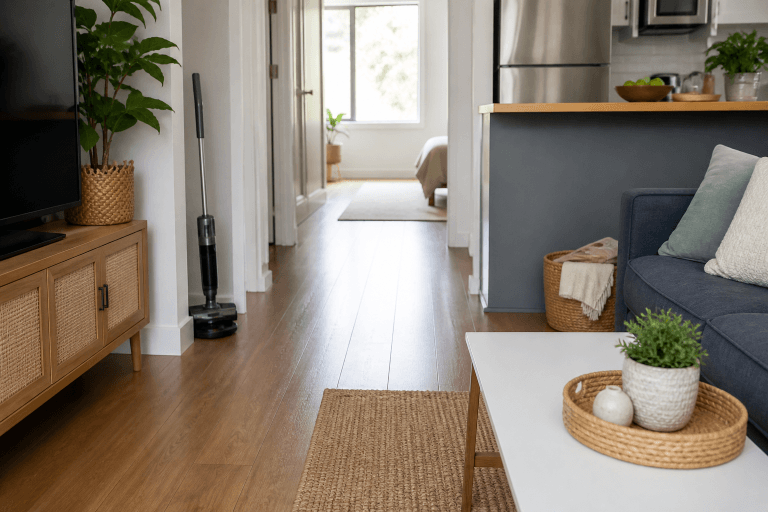
A small apartment can be quick to clean, but only when the space lets cleaning happen. If every surface is full, the floor is blocked, supplies are scattered, and storage is packed tight, even a small room takes too long.
Making an apartment easier to clean is mostly preparation. Fewer objects on the floor. Clearer homes for daily items. Cleaning supplies in one place. Furniture that can be moved or cleaned around without a fight.
Clear The Floor Line
The floor is the first cleaning shortcut. When shoes, bags, baskets, cords, and storage boxes sit around the edges of every room, sweeping or vacuuming takes longer before it even starts.
Walk the apartment and remove one floor item from each room. Choose the basket that catches random things, the extra stool, the plant stand in the path, or the bag that never gets unpacked.
Keep only floor storage that has a clear job and does not block cleaning. A shoe tray by the door may help. Three baskets of mixed items probably do not.
Reduce Surface Parking
Cleaning a surface takes two steps when it is clear: wipe and move on. It takes ten steps when the surface holds mail, cups, chargers, hair ties, receipts, books, and half-finished decisions.
Choose one surface per room to keep easier to clean. In the kitchen, protect the main prep counter. In the bedroom, reset the nightstand. In the living room, clear the coffee table. In the bathroom, reduce the sink ledge.
Do not aim for empty everywhere. Aim for surfaces with fewer decisions on them.
Put Supplies Where Cleaning Starts
Cleaning is easier when supplies are close to the task. Keep bathroom supplies near the bathroom if possible, kitchen supplies near the kitchen, and general supplies in one caddy or closet.
Follow product labels for storage, keep supplies away from food where practical, and avoid mixing cleaning products. If children or pets live in the home, choose storage locations with that in mind.
A small caddy can prevent the “where is the cloth?” delay that stops quick cleaning.
Make Trash And Recycling Easier To Finish
If trash or recycling piles up, the problem may be the path. The bin may be too small, too hidden, too far away, or annoying to empty.
Put bins where waste actually happens: kitchen, bathroom, desk, or entry if packaging collects there. Keep recycling simple enough for the household to use correctly according to local rules.
Empty small bins before they overflow. Overflow turns a two-minute task into a larger reset.
Choose Furniture That Allows Access
Cleaning around furniture is part of living with it. A sofa tight against a radiator, a bed with no side access, a coffee table that blocks the vacuum, or a dresser that traps dust behind it can make cleaning harder.
Move one piece slightly and see if cleaning improves. A few inches can matter. If a storage piece makes the path difficult every week, it may be costing more than it gives.
Avoid storing loose items under furniture. Use containers with labels, or leave the space open enough to clean.
Build A Short Daily Reset
A small apartment benefits from a five-to-ten-minute daily reset. It should not become a deep clean.
Move dishes to the kitchen. Put dirty clothes in the hamper. Return shoes to the entry area. Clear the main counter. Put paper in one tray. Throw away obvious trash.
Stop there. The point is to reduce tomorrow’s cleaning friction.
Use Weekly Zones
Instead of saving everything for one cleaning day, assign tiny zones during the week. One day for bathroom sink and mirror. One for kitchen counters. One for floors. One for laundry. One for paper and trash.
This works well in small homes because each zone is limited. It also prevents the apartment from needing a dramatic rescue every weekend.
Keep Cleaning Tools Easy To Start
A broom buried behind luggage will not be used for quick crumbs. A vacuum with no charging spot becomes another object to step around. Put the tools used most often where they can be reached without moving several things first.
Small homes often do well with a simple tool zone: one place for the broom or vacuum, one caddy for basic supplies, and one spot for clean cloths. The setup does not need to be large. It needs to be obvious.
Do Not Organize Dirt
Sometimes cleaning takes too long because clutter is being cleaned around. If wiping a shelf requires moving twenty objects, edit the shelf. If vacuuming requires shifting five floor baskets, reduce the baskets. If the bathroom sink is always crowded, move backups out.
Cleaning and organizing are different tasks, but they affect each other. A small apartment is easier to clean when organization lowers the number of things in the way.
More Helpful Guides
- How to Organize Cleaning Supplies in a Small Home
- A Room-by-Room Home Organization Plan for Busy People
- Small Apartment Layout Ideas for Better Flow