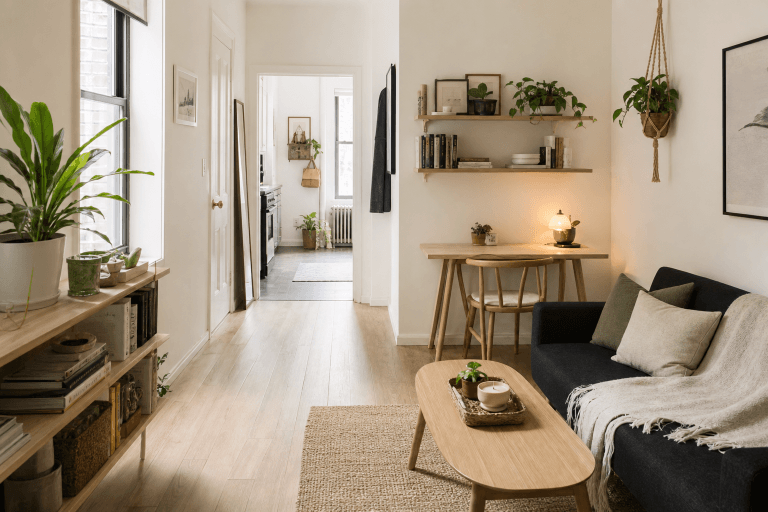
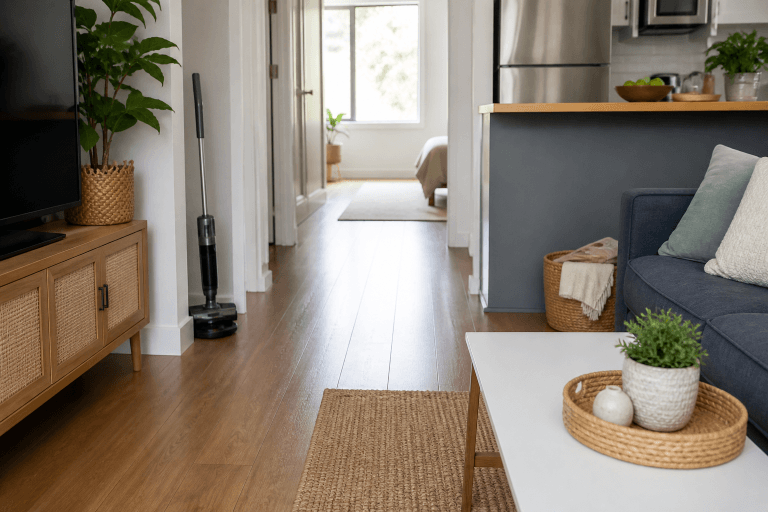
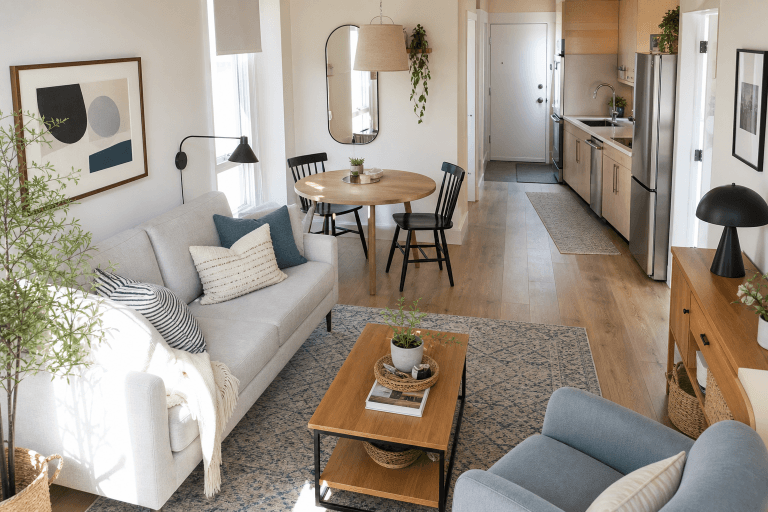
Small-Space Living
How to Create Zones in a Studio Apartment
Divide a studio apartment into sleeping, working, eating, and relaxing zones without building walls or making the room feel crowded.
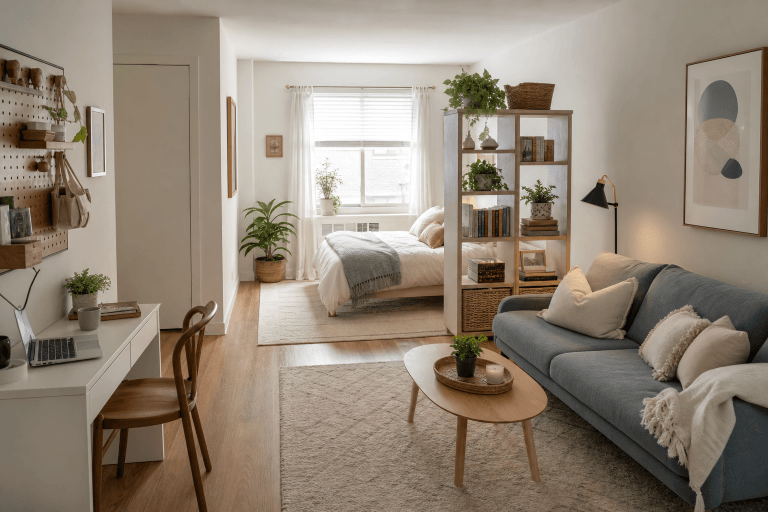
A studio apartment does not need fake walls to feel organized. It needs cues. The bed should read as the sleeping area. The desk should not leak into the sofa. The eating spot should not feel like an afterthought wedged into a traffic path.
The mistake is trying to divide the room too aggressively. Tall bookcases, curtains, and screens can help in the right apartment, but they can also block light, cut off air, and make a small studio feel smaller. Start with softer boundaries first: rugs, lighting, furniture direction, storage habits, and the way each surface is used.
Draw The Zones Around Real Life
List what actually happens in the apartment. Most studios need some mix of sleeping, getting dressed, eating, working, relaxing, exercising, and storing everyday items. Do not include a formal dining zone if dinner usually happens at the coffee table. Do not build a permanent office if work happens twice a month.
Then choose the zones that matter most. A studio usually cannot give every activity equal space. Sleeping and daily storage may need more attention than a dining setup used rarely. A remote worker may need a clearer desk boundary than a large lounge area.
Use the floor first. Stand in the doorway and look for the natural path to the kitchen, bathroom, closet, bed, and window. Zones should sit beside that path, not across it.
Turn Furniture Instead Of Adding More
Furniture direction can create separation without buying anything. A sofa facing away from the bed can make a living zone. A desk placed perpendicular to a wall can mark a work area. A dresser beside the bed can act like a low boundary and still hold clothing.
Keep large pieces from blocking doors, drawers, radiators, windows, or the main walking route. In studios, one badly placed item can make the whole apartment feel crowded.
Try a temporary layout before committing. Move one piece, live with it for two days, and notice the annoying moments. Can the closet open? Does the chair catch the path to the bathroom? Can groceries reach the kitchen without a sharp turn?
Use Rugs Only Where They Help
A rug can make a living area feel separate from a sleeping area, but it is not required. In a very small studio, too many small rugs can chop the room into pieces.
Use one rug to anchor the largest shared zone, usually the sofa or bed area. Let furniture touch the rug enough that it looks intentional. If a rug creates a tripping edge in the main path, skip it.
For renters with hard floors, washable or low-pile rugs are easier to maintain. Avoid thick rugs where doors need to swing or rolling chairs need to move.
Give Each Zone Its Own Light
Lighting is one of the least bulky ways to separate a studio. Use a bedside lamp for the sleeping zone, a task lamp for work, and a softer light near the sofa if the room allows it.
The goal is not more brightness everywhere. It is control. When the desk lamp is on and the bed light is off, the room feels different. When the warm lamp near the sofa is on, work can feel closed for the day.
If outlets are awkward, plan cords carefully. Keep them out of walking paths, avoid straining plugs, and do not cover power strips or ventilation areas.
Make The Bed Look Like One Zone, Not The Whole Apartment
The bed often dominates a studio because it is large and personal. You do not have to hide it. You do need to contain it visually.
Make the bedding simple enough to reset. Add a small bedside surface if possible, even if it is a shelf, stool, or narrow table. Keep laundry off the bed, and give half-worn clothes a hook or basket nearby.
If the bed is the first thing seen from the door, use a low boundary rather than a heavy divider. A dresser, open shelf, plant, or curtain panel can soften the view without closing the room. Leave enough space to walk and make the bed.
Keep Work From Spreading
Work zones in studios need a closing ritual. Otherwise the laptop, papers, charger, and notebooks spread into every other zone.
Use one container for work items that can leave the desk at the end of the day. A drawer, box, bag, or shelf section is enough. Keep current papers separate from old papers. If a document needs action, put it in one visible tray. If it does not, file it or recycle it.
The desk surface should reset faster than it gets messy. If clearing work takes fifteen minutes every night, the system is too complicated.
Eating Zones Can Be Small
Not every studio needs a dining table. A wall-mounted table may not be allowed, and a full table may block the room. A small bistro table, folding table, counter stool, or cleared coffee table can work if it is honest about how meals happen.
Wherever eating happens, store the supporting items nearby: placemats, napkins, coasters, lunch containers, or a tray. The zone becomes easier to reset when meal items do not have to travel across the whole apartment.
If the same surface is used for work and eating, create a hard switch. Work items go into a container before meals. Dishes leave the surface after meals. Shared surfaces need endings.
Use Storage As A Boundary
Storage can separate zones if it solves a real category. A low bookcase between bed and sofa can hold books, baskets, or linens. A dresser can separate dressing from sleeping. A cart can create a kitchen edge.
Avoid open storage packed with many small items. In a studio, everything is visible from almost everywhere. Closed bins, cabinet doors, and calmer shelves help the zones feel less noisy.
Mistakes That Make A Studio Feel Chopped Up
One mistake is using tall dividers before fixing layout. A divider that blocks light can make the studio feel boxed in.
Another mistake is creating zones for imaginary habits. The room should support the routines that actually happen.
It is also common to forget the main path. A beautiful zone still fails if you have to squeeze around it ten times a day.
Finally, do not let every zone collect its own clutter. The smaller the home, the more each zone needs a reset habit.
Read Next
- Small Apartment Layout Ideas for Better Flow
- Small Space Living: A Practical Guide to Making a Tiny Home Feel Bigger
- How to Organize a Small Home Office in a Shared Room