Room-by-Room
Small Laundry Area Organization Ideas for Apartments
Organize laundry supplies, drying space, hampers, and cleaning items in a closet, hallway, bathroom, or tiny utility corner.
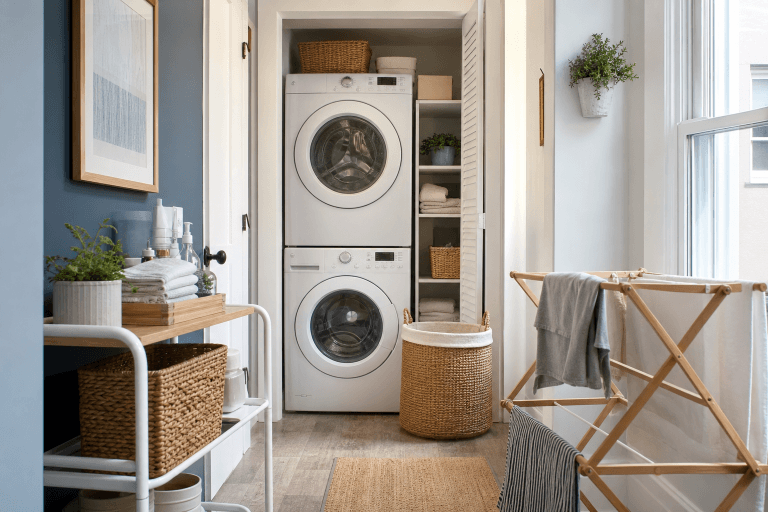
Apartment laundry areas come in odd forms. A closet with stacked machines. A hallway nook. A shared laundry room down the stairs. A washer beside the kitchen. A drying rack that lives behind the sofa until it is needed and then somehow blocks everything.
The best laundry setup is not the prettiest one. It is the one that keeps laundry moving: dirty clothes to wash, clean clothes to dry, dry clothes to put away, supplies back to one place.
Follow The Laundry Path
Start with the route laundry actually takes. Where do dirty clothes collect? Where are they sorted? Where are supplies stored? Where do clothes dry? Where do clean clothes wait before being put away?
Most laundry clutter happens at the transition points. A hamper is too far away, so clothes land on the chair. Detergent has no shelf, so it sits on the floor. Clean laundry has no landing rule, so it stays in a basket for days.
Write down the weakest step. Fix that first.
Keep Supplies In One Reachable Place
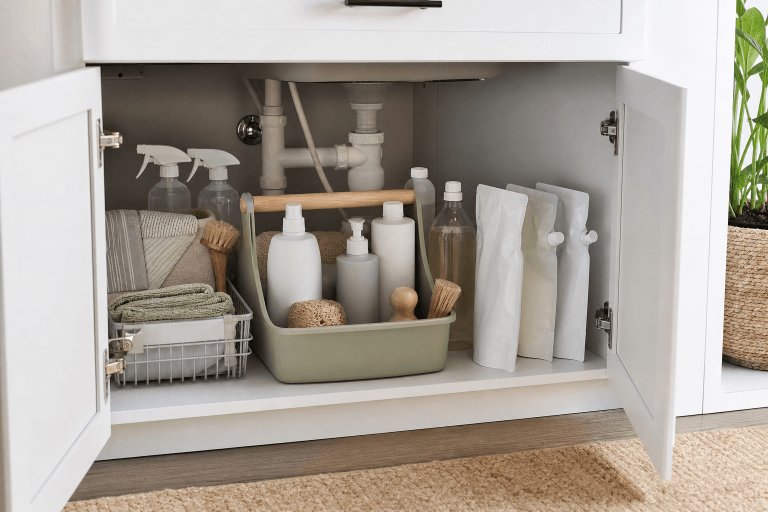
Laundry supplies should be easy to grab and easy to return. Choose one shelf, caddy, cabinet, bin, or cart for detergent, stain treatment, dryer sheets if used, clothespins, mesh bags, and any regular tools.
Follow product labels for storage and keep supplies away from food and personal care items where practical. If children or pets live in the home, choose storage with that in mind.
Avoid keeping every product you have ever bought. Remove empty bottles, dried-out products, duplicates that do the same job, and tools you do not use.
If laundry happens outside the apartment, a portable caddy is often more useful than shelf storage. It should hold only what travels with you.
Give Hampers A Real Location
A hamper works only if it is where clothes are removed. If clothing lands on the bedroom floor every night, the hamper may be too far from the real routine.
Small homes may need more than one small hamper instead of one large hamper. A bedroom hamper and a bathroom towel basket can reduce floor piles. If space is very tight, a collapsible hamper may work better than a rigid one.
Do not create a sorting system with more categories than the household will maintain. Lights, darks, towels, delicates, and activewear may sound orderly, but if everything ends up on the floor, the system is too fussy.
Make Drying Less Awkward
Drying space is a common small-apartment problem. A rack can block a path, towels can hang over chairs, and delicates can end up wherever there is a doorknob.
Choose a drying location that does not block the main route through the home. A folding rack, over-tub rack, shower rod, door rack, or wall-mounted option may work depending on the lease, surface, and ventilation.
Let items dry with enough airflow. Avoid crowding damp textiles into closed closets or piles. If moisture is a concern in the room, choose the drying spot carefully and keep air moving according to what is practical in your home.
Store the drying rack where it returns easily. If putting it away is annoying, it may stay out permanently.
Stop Clean Laundry From Becoming Furniture
Clean laundry often becomes a temporary table, chair cover, or bed pile. The fix is a finishing rule.
When laundry comes out dry, choose one of two paths: put it away now, or put it in one clean-laundry basket that must be emptied before the next load. Do not let multiple clean baskets spread through the apartment.
If folding is the barrier, simplify the categories. Hang what wrinkles, fold what needs stacking, and use drawer bins for items that do not need perfect folding. A system that gets clothes put away is better than one that waits for ideal folding energy.
Use Wall And Door Storage Carefully
Laundry areas often benefit from vertical storage, but avoid overloading temporary hooks or shelves. Check lease rules, weight limits, and surface type before mounting anything.
Good lightweight wall storage includes a hook for a lint roller, a small bag for clothespins, or a slim rail for hangers. Heavier supplies are usually better on a shelf, cart, or cabinet.
If the laundry area is a closet, use the inside of the door only if the organizer does not hit machines, shelves, or supplies when the door closes.
One Shelf Can Be Enough
If the laundry area has one shelf, give it clear zones: products on one side, small tools in a container, extra supplies behind current supplies, and empty space for setting something down briefly.
Do not fill the shelf with unrelated storage. The laundry shelf should not become the home for light bulbs, gift wrap, tools, and old paint unless there is truly no other option.
Keep Going
- How to Organize Cleaning Supplies in a Small Home
- A Room-by-Room Home Organization Plan for Busy People
- How to Make a Small Apartment Easier to Clean