Room-by-Room
How to Organize a Small Bathroom with Almost No Counter Space
Make a tiny bathroom easier to use with practical storage for daily toiletries, towels, cleaning supplies, and shared routines.
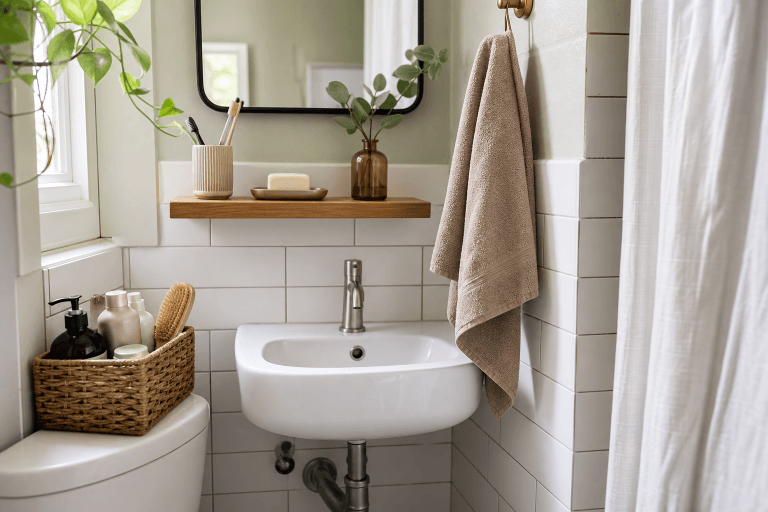
A small bathroom with almost no counter space forces every item to compete. Toothbrushes, skincare, hair products, towels, cleaning supplies, makeup, medicine, razors, and backup bottles all seem important, but the sink area can only hold a few things before it stops working.
The useful approach is not to hide everything. It is to separate daily items from backup items, wet items from dry items, and shared items from personal items. Once those decisions are clear, the bathroom becomes easier to use even if the room stays tiny.
Clear The Sink Like It Is A Work Surface
Treat the sink area the way you would treat a kitchen counter. It needs open space to function.
Remove everything from the sink, ledge, counter, top of the toilet, and any shelf within arm’s reach. Wipe the surface. Then put back only what is used every day at the sink.
Daily sink items may include toothbrushes, toothpaste, hand soap, face wash, contact lens supplies, a razor, or one small skincare item. The exact list depends on the household. The limit is the important part.
Use one cup, tray, or narrow container if items need to stay visible. Avoid a large tray that holds everything. A tray should create a boundary, not become a new counter.
Separate Daily From Backup
Small bathrooms become crowded when backups live beside daily products. An unopened shampoo bottle does not need the same location as the shampoo being used today.
Make two zones:
- daily items used this week
- backup items not yet opened
Daily items deserve the easiest shelf, drawer, or caddy. Backups can live higher, lower, under the sink, in a linen closet, or in a labeled box outside the bathroom if storage is tight.
Keep backups limited. If the bathroom holds four body washes, three toothpastes, and several unopened products, it will feel crowded even when everything is technically organized.
Use The Shower Ledge Carefully
The shower is often the most crowded part of a tiny bathroom. Bottles gather on the tub edge, fall over, or leave no room for cleaning.
Keep only active shower products in the shower: current shampoo, conditioner, body wash, face wash, razor, or whatever is truly used there. Remove almost-empty duplicates, products that did not work, and extra bottles waiting for later.
If you use a hanging caddy or corner shelf, check that it sits securely and does not block fixtures or make cleaning harder. Follow product instructions and avoid overloading it.
Shared bathrooms need clearer limits. One active set per person may work better than a shared pile where nobody knows what is almost empty.
Find Towel Storage That Matches The Room
Towels are bulky, and tiny bathrooms rarely have room for too many.
Keep daily towels in the bathroom only if they can dry properly and do not crowd the room. Store extra towels somewhere else: a bedroom drawer, linen shelf, closet basket, or under-bed bin. One or two backup towels near the bathroom may be enough for a small household.
Hooks are usually better than bars in very small bathrooms because they need less wall width, but they should still allow towels to dry. If you rent, check what can be mounted and use existing bars or over-door options where practical.
Old towels can become cleaning rags, but keep that category limited. A pile of “rag towels” can take over a cabinet quickly.
Make A Personal Caddy For Shared Bathrooms
If multiple people use the bathroom, counter clutter often comes from mixed ownership. A personal caddy can help, especially when cabinet space is small.
Each person gets one container for daily items. It can live in a bedroom, under the sink, or on a shelf if there is room. The caddy should be easy to carry and easy to put away.
This is especially useful for items that do not need to stay in a humid room: makeup, hair tools, extra skincare, personal grooming tools, and small toiletries.
Hair tools should be fully cool before storage. Keep cords loose enough that they are not strained, and follow the manufacturer’s safety instructions.
Use Vertical Space Without Making The Bathroom Feel Packed
A shelf over the toilet, an over-door organizer, or a narrow wall cabinet can help, but visual crowding happens fast in a small bathroom.
Use visible shelves for calm categories: folded towels, one basket, daily items in simple containers, or a small amount of toilet paper. Put mixed packaging and backups behind a door or in a closed bin when possible.
Before adding storage over a toilet or near a sink, check reach, stability, moisture, and cleaning access. Avoid storing heavy or fragile items where they could fall.
Cleaning Supplies Need Their Own Boundary
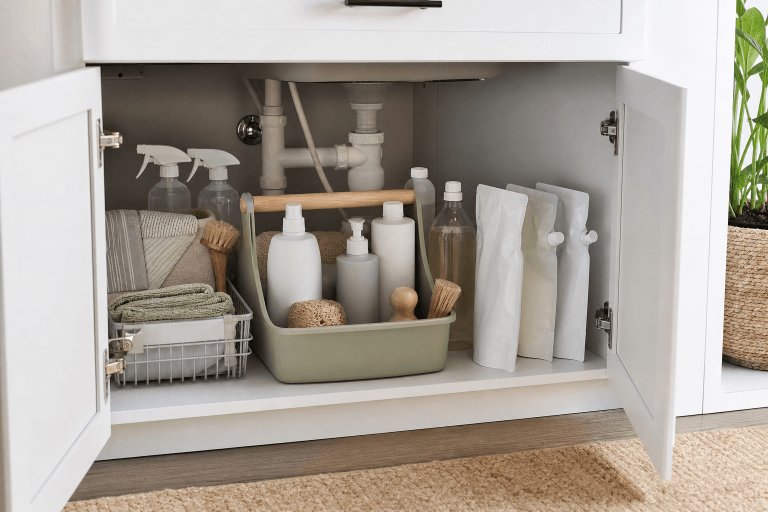
Bathroom cleaning supplies should not drift into personal care storage. Keep them in one caddy, under-sink area, or nearby closet section. Follow label directions for storage and ventilation. Avoid mixing cleaning products.
If under-sink space is tight because of plumbing, use a shallow tray or small caddy rather than forcing a tall organizer around pipes. The simpler setup is often easier to clean.
Keep only the tools used regularly: toilet brush, cloths, one or two cleaners that suit your routine, and backup supplies within reason.
Mistakes That Make A Tiny Bathroom Harder
One mistake is keeping every product in the bathroom because it is a bathroom item. Backup products can live elsewhere.
Another mistake is storing too much on the sink. Even useful daily items need a limit.
It is also common to buy bulky under-sink organizers before measuring around pipes. Measure first.
Finally, do not let almost-empty products multiply. Finish one, combine only when appropriate and safe, or let it go.
Read Next
- How to Organize Cleaning Supplies in a Small Home
- The Complete Decluttering Checklist for Apartments
- A Room-by-Room Home Organization Plan for Busy People