Storage Ideas
Kitchen Storage Ideas for Small Homes and Rentals
Smart small-kitchen storage ideas for renters and small homes, including cabinets, counters, drawers, pantry substitutes, and awkward corners.
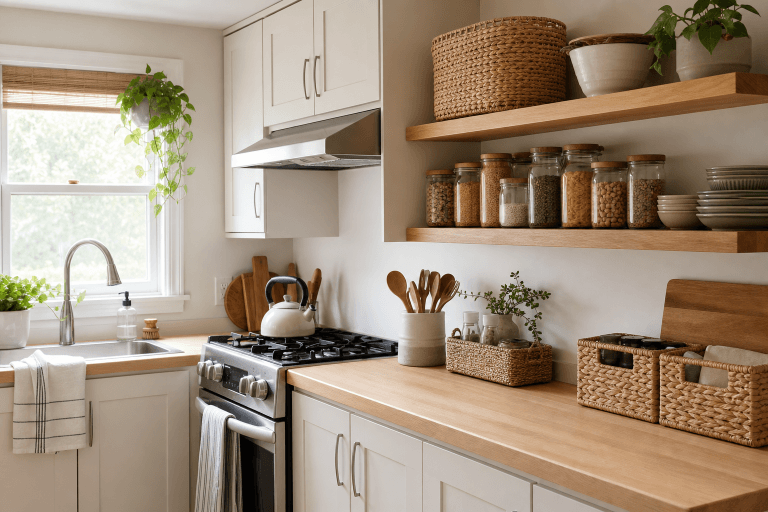
A small kitchen does not have to be empty to work well. It does, however, need to be honest. If there is only one good patch of counter, that patch cannot also be the mail area, appliance display, snack station, and drying zone. If there are three narrow drawers, one of them cannot hold every tool that might be useful someday.
Small-kitchen storage improves when the busiest moments get easier: making coffee, packing lunch, cooking dinner, unloading groceries, washing dishes. The best setup is not the one with the most containers. It is the one that lets you reach the things used every day without moving half the cabinet.
This guide is written for rentals and small homes, so the ideas avoid renovation-heavy fixes. Check lease rules before mounting anything, pay attention to weight limits, and choose freestanding or inside-cabinet options when the surface is uncertain.
Start By Taking The Counter Seriously
Counters are not spare shelves. They are the kitchen’s work surface.
Clear one section completely and sort what was there into daily, weekly, rarely, and does not belong in the kitchen. Wipe the surface before anything returns. Then decide what that section needs to do. If it is the only practical food-prep space, keep it as clear as possible.
Daily items can stay out when they are genuinely used every day and grouped neatly. Coffee supplies, dish soap, a fruit bowl, or cooking oils may earn a place. The blender used twice a month probably does not.
Try this counter rule for a week: one station can stay, everything else needs a cabinet, drawer, shelf, or tray that can move. A station might be coffee, dishwashing, or cooking oils. If the counter still feels crowded, the station is too large or there are too many of them.
Small kitchens feel more functional when there is one reliable empty area, even if the rest of the room is modest.
Give Every Cabinet A Job
Cabinets become frustrating when they store mixed categories just because there is space. A shelf with mugs, rice, batteries, lunch containers, and a holiday platter is not full of bad items. It is full of decisions waiting to annoy you.
Choose broad cabinet zones:
- everyday dishes and glasses
- cooking tools
- food storage containers
- pantry basics
- baking or special cooking supplies
- coffee or tea
- cleaning supplies, stored safely and separately from food where practical
- occasional items
Put the most-used categories in the easiest cabinets. Heavy items are usually better low. Daily dishes should be close to the sink or dishwasher if possible. Cooking tools should live near the stove or prep area.
Deep cabinets need pull-out logic even if you do not have pull-out hardware. Use a basket, tray, or open container so small items can come forward together. This helps with spices, snacks, tea, packets, and container lids.
Leave a little room near the front of the shelf. If every shelf is packed to the edge, putting groceries away becomes a puzzle.
Drawers Need Fewer Tools, Not Just Dividers
A crowded utensil drawer is usually not a divider problem. It is a too-many-tools problem.
Empty one drawer and remove duplicates first. Keep the spatula you reach for, not all four. Keep the opener that works. Move seasonal or rarely used tools to a secondary area if they are worth keeping.
Then group the drawer by use:
- everyday utensils
- prep tools
- measuring tools
- clips and small helpers
- sharp tools, stored in a way that suits your household
If you do not own drawer dividers, use small boxes, jar lids, shallow containers, or folded cloth bags temporarily. Let the temporary setup prove what size divider would actually help.
One useful exercise is the top-twenty drawer. Choose the twenty tools used most often and give them the best space for a month. Put the rest somewhere less convenient. Anything you miss can return. Anything you do not miss should not control the main drawer.
Food Containers Need A Hard Limit
Food storage containers can quietly take over a small kitchen because each piece seems reasonable. The problem shows up when lids go missing, stacks fall, and the cabinet has to be rearranged every time leftovers need a home.
Pull out the whole category. Match lids and bases. Remove anything warped, stained beyond your comfort, missing a mate, or difficult to close. Recycle or repurpose according to local rules and the material.
Choose one storage method:
- containers stacked by shape with lids upright nearby
- lids attached, if the collection is small
- lids in one narrow bin
- containers limited to one drawer
- a shelf section with one front-to-back container
The limit matters more than the method. If containers overflow the assigned space, reduce the number. A small set that opens and closes easily is better than a large collection that falls out twice a week.
Keep the sizes that match how you eat: lunches, leftovers, freezer portions, snacks. Let actual meals choose the storage, not the other way around.
When There Is No Pantry
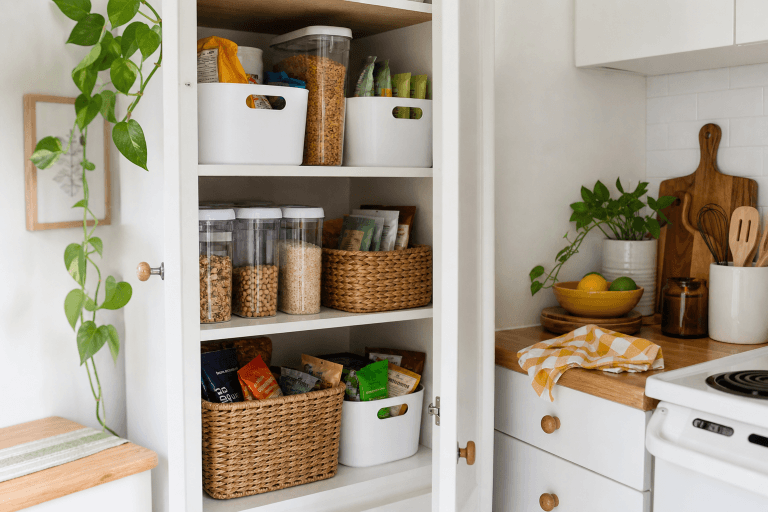
Many apartment kitchens have no pantry. Food may be split between cabinets, a rolling cart, a shelf, and the top of the refrigerator. That can work if the categories are clear.
Pick one pantry substitute as the main area. It might be a cabinet, a freestanding shelf, a cart, a deep drawer, or a nearby closet shelf. Then sort food by routine rather than by packaging.
Common groups:
- breakfast
- snacks
- grains and pasta
- cans and jars
- baking
- sauces and seasonings
- backup items
Keep open or current items in front. Backups should live behind, above, or in one backstock area so you do not buy duplicates by accident.
If food is stored outside the kitchen, keep it limited to shelf-stable items and check it regularly. A pantry substitute only works when it is easy to review before grocery shopping.
Store Around The Meals You Actually Make
The kitchen should support real meals, not imaginary cooking habits. A household that makes toast, coffee, rice bowls, pasta, soup, and quick lunches needs a different layout from one that bakes every weekend.
Write down the meals made most often. Then walk through each one. How many cabinet doors open? Which tool is always awkward to reach? Which ingredient ends up on the counter because its home is too annoying?
Build small stations from the answers:
- a breakfast shelf with oats, cereal, coffee, tea, or spreads
- a lunch area with containers, bags, napkins, or wraps
- a dinner prep zone with oil, salt, frequently used seasonings, pasta, rice, or cans
- a snack bin that can be pulled out and returned easily
This does not require matching containers. A drawer corner or one shelf section can be enough. The point is to reduce repeated searching.
Move rarely used categories out of prime space. If baking happens twice a year, baking supplies do not need the easiest cabinet. If baking happens every Sunday, they do.
Vertical Storage, Carefully
Walls, cabinet doors, and over-door areas can help a small kitchen, but they can also make it feel busier. Use vertical space for categories that solve a clear daily problem.
Renter-friendly options may include freestanding shelves, over-door racks, cabinet-door organizers, shelf risers, tension rods inside cabinets, or hooks used only where allowed. Magnetic storage and adhesive pieces depend on the surface, the item weight, and the product instructions.
Before adding anything, check three things: lease rules, weight limits, and whether the item will block doors or drawers. If the answer is uncertain, choose freestanding storage or inside-cabinet organization.
Open storage needs editing. Mismatched packages, appliances, and crowded jars can make a small kitchen feel noisy. Use open shelves for items that are used often and easy to keep tidy. Put less attractive backstock behind closed doors when possible.
Awkward Spaces Are For Occasional Things
The top of the fridge, a deep corner shelf, a gap beside a cabinet, or a narrow wall can help, but awkward space should not hold daily items.
Good uses include lightweight backstock, trays, cutting boards, lunch bags, paper towels, or occasional serving pieces. Avoid heavy, fragile, or frequently used items in high awkward spots. If reaching something requires a balancing act, it is not a good daily home.
A narrow gap can hold flat items such as trays or cutting boards if they are stable and easy to pull out. The top of the fridge can hold a lightweight bin, but avoid crowding ventilation or storing anything that may fall.
Assign awkward spots last. First fix the counter, main cabinets, drawers, and food storage. Dead space should support the kitchen, not become the place where every unresolved item goes.
Cleaning Supplies Need A Clear Boundary
In a small kitchen, cleaning products can visually mix with food, towels, and tools. Give them a contained home.
Choose one area: under the sink, a nearby cabinet, a portable caddy, or a shelf away from food. Follow label directions for storage and ventilation. Avoid mixing cleaning products. Keep supplies away from items used for eating and food prep where practical.
Under-sink storage should work around pipes, disposal equipment, and dampness. A washable tray or caddy can catch small leaks and lift out easily. Do not force shelves or stacks into unstable positions.
Keep only the supplies actually used. Several products that do the same job make the area harder to maintain.
A Weekly Reset For A Small Kitchen
Small kitchens drift out of order quickly because every surface is close to every other surface. A short weekly reset catches the drift before it becomes a full project.
Clear the counter. Return pantry items to their zones. Match any loose containers and lids. Check the fridge for food that needs attention. Wipe the main prep area. Empty trash or recycling if it is crowding the room.
Then notice the repeated problem. If snacks keep landing on the counter, the snack zone is too hard to reach. If pans never go back, the cabinet may be too full. If mail appears in the kitchen, the entry needs a better landing spot.
Storage is not finished when it looks tidy once. It is working when the room can return to tidy without too much effort.
Mistakes That Shrink A Small Kitchen
One mistake is keeping every appliance on the counter. Convenience matters, but counter space matters too. Daily use earns space; occasional use usually does not.
Another mistake is buying matching containers before measuring shelves and checking food habits. Containers should fit the kitchen, not create a display project.
Open shelving can also become a problem when it holds too many packages or small items. A shelf can be useful and still visually loud.
Finally, avoid stacking so tightly that one item cannot be removed without moving several others. Storage that is annoying every day will not stay organized.
Read Next For Related Small-Home Fixes
- No-Pantry Kitchen Organization Ideas for Small Apartments
- How to Clear a Kitchen Counter in 15 Minutes
- Small Space Living: A Practical Guide to Making a Tiny Home Feel Bigger
- The Complete Decluttering Checklist for Apartments