Storage Ideas
How to Store Seasonal Items in a Small Home
Store holiday decor, winter clothes, summer gear, and seasonal extras without losing the storage space you need every day.
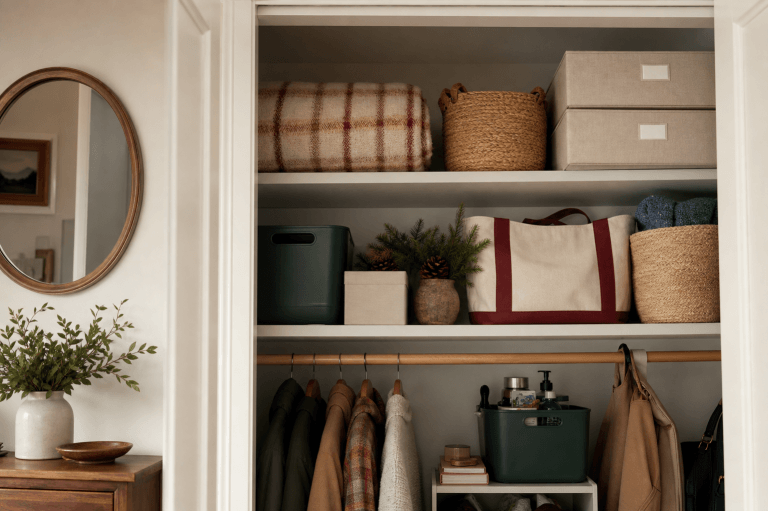
Seasonal items are awkward in a small home because they are useful, but not useful today. Winter coats, summer gear, holiday decor, spare blankets, fans, boots, picnic items, and gift wrap all need to exist somewhere while everyday storage stays usable.
The goal is not to make seasonal storage invisible. The goal is to keep it from stealing the easiest space from daily life.
Separate Current Season From Off Season
Start by pulling together one seasonal category. Do not gather every seasonal item in the home unless you have time. Choose winter clothing, holiday decor, summer gear, or bedding.
Sort it into current season, off season, no longer used, and belongs elsewhere. Current-season items need reachable storage. Off-season items can move to higher shelves, under-bed bins, closet corners, or less convenient areas.
This one decision solves many small-home problems. Daily coats should not fight for space with beach towels in January. Summer gear should not crowd the entry in winter.
Use The Harder Spots On Purpose
The harder spots in a small home are not useless. They are useful for items used only a few times a year.
Consider:
- high closet shelves
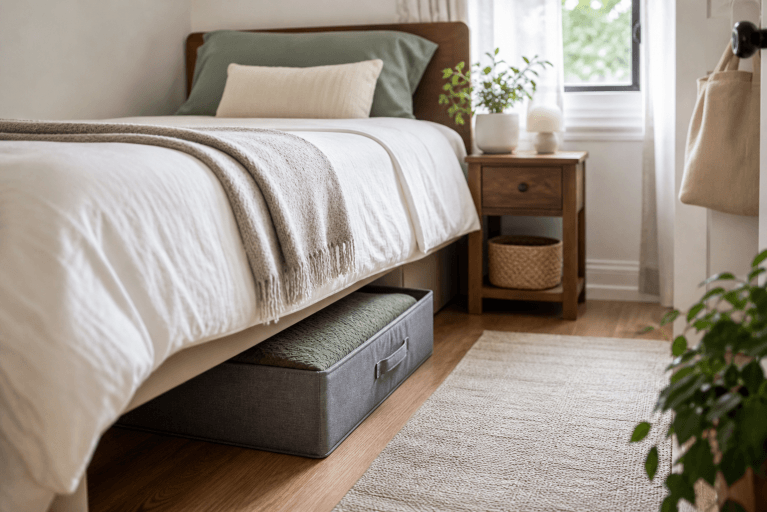
- under-bed containers
- the back of a deep cabinet
- a labeled bin in a wardrobe
- a storage ottoman with one clear category
- luggage that is otherwise empty
Do not use awkward storage for daily items. A step stool should not be required for something used every morning.
Keep Holiday Decor Edited
Holiday decor expands easily because it is tied to memory and tradition. In a small home, give it a firm boundary: one bin, one shelf, or one labeled box per season.
Store fragile items with enough protection. Keep heavy boxes low. Label the outside clearly so you do not open three bins to find one string of lights.
After each holiday, notice what did not get used. If an item stayed in the box for another year, decide whether it still deserves storage.
Store Clothing By Weather, Not Fantasy
Seasonal clothing should match the climate and actual wardrobe. Heavy coats, boots, scarves, swimsuits, sandals, and specialty clothing can move in and out of prime closet space.
Before storing clothing, make sure it is clean and dry. Use containers that suit your space and fabric needs. Avoid packing so tightly that items are crushed or hard to retrieve.
Label containers plainly: winter sweaters, summer shoes, coats, extra bedding. Vague labels like “seasonal” force you to open everything later.
Let Luggage Work, But Do Not Hide Decisions
Empty luggage can hold seasonal items if it is easy enough to access and the contents are labeled. It works well for travel accessories, off-season clothing, or holiday textiles.
The risk is forgetting what is inside. Put a label on the luggage tag or keep a note in your storage list. Do not use luggage for random items that are hard to categorize.
If you travel often, keep luggage ready enough that seasonal storage does not make packing harder.
Create A Small Storage Map
A storage map sounds formal, but it can be a simple note on your phone. List where seasonal categories live: winter coats in hall closet top shelf, holiday decor under bed left side, summer picnic items in kitchen high cabinet.
This prevents repeat searching and duplicate buying. It also helps in shared homes, where one person’s memory should not be the whole storage system.
Keep A Small Current-Season Basket
Some seasonal items are active for only a few weeks: gloves near the door, sunscreen in summer, gift wrap during holidays, or extra blankets during a cold stretch. Give these items a temporary basket instead of spreading them through permanent storage.
When the season changes, empty the basket. Put keepers back into seasonal storage and remove anything that was used up, broken, or ignored.
Keep The Best Storage For Daily Life
If a seasonal bin occupies the easiest bedroom drawer or entry shelf, move it. Daily life needs the best access.
Use this rule when stuck: the more often an item is used, the easier it should be to reach. Seasonal items can accept inconvenience. Daily items should not.
Review Before The Season Changes
Review seasonal storage before the season starts, not after everything is already needed. Pull one bin, check condition, remove items no longer used, and move current items forward.
At the end of the season, store only what earned its place. This keeps the category from growing quietly every year.
Avoid Seasonal Storage Mistakes
Do not store seasonal items in unlabeled opaque bins. Do not let seasonal decor take over daily closets. Do not keep bulky items only because they were expensive once. Do not buy new storage before removing items that no longer fit the household.
Small homes can keep seasonal items. They just need seasonal items to wait their turn.
More Storage Help
- Under-Bed Storage Ideas That Do Not Turn Into Hidden Clutter
- How to Declutter a Closet When You Have Very Little Storage
- Small Space Living: A Practical Guide to Making a Tiny Home Feel Bigger