Storage Ideas
No-Pantry Kitchen Organization Ideas for Small Apartments
Organize food, snacks, spices, and cooking basics when your apartment kitchen does not have a pantry.
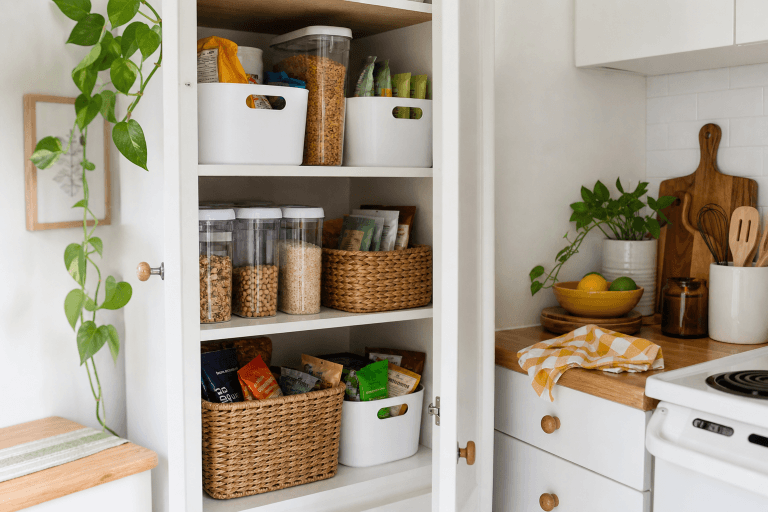
A kitchen without a pantry is not automatically disorganized. The problem starts when food has no main address. Pasta is in one cabinet, snacks are on the counter, cans are above the fridge, breakfast is near the dishes, and backups hide behind mixing bowls.
The fix is to create a pantry substitute. It does not have to look like a pantry. It only needs to make food easy to find, review, and put away after groceries.
Choose One Main Food Zone
Pick the best available place for most shelf-stable food. This might be one cabinet, a deep drawer, a freestanding shelf, a rolling cart, or a section of a nearby closet.
Do not spread food across five places unless the kitchen truly requires it. A no-pantry kitchen works better when there is one main zone and one small backup zone.
Good pantry substitutes are easy to see and easy to restock. If the area is too high, too deep, or blocked by cookware, food will drift to the counter.
Sort Food By Meals, Not By Packaging
Packaging categories can be confusing. Boxes, bags, jars, and cans do not always match how food is used. Sort by routine instead.
Useful groups include:
- breakfast
- snacks
- grains and pasta
- cans and jars
- baking
- sauces and seasonings
- lunch supplies
- unopened backups
Keep the groups loose enough to maintain. A small kitchen does not need a museum-level pantry. It needs a setup that lets you see what is available before shopping.
Protect One Easy Shelf
The easiest shelf should hold food used most often. In many apartments, that means breakfast, snacks, rice, pasta, coffee, tea, or quick dinner ingredients.
Do not give prime space to rare baking supplies or holiday food unless those items are used often. Prime space should match the week you actually live.
If the shelf is deep, use a basket or tray to pull a category forward. This is especially useful for snack bags, small packets, tea, spice refills, and baking items.
Use The Fridge Top Carefully
The top of the refrigerator often becomes unofficial pantry space. It can be useful, but it should not hold heavy, fragile, or daily items that require awkward reaching.
Use it for lightweight backstock, paper goods, or a clearly labeled bin. Keep items away from heat or ventilation areas according to the appliance setup. If reaching the top requires unsafe stretching, choose another place.
The top of the fridge should not become the place where groceries go to be forgotten.
Give Snacks A Real Home
Snacks tend to land on the counter because they are used often and come in awkward packaging. A single snack bin or shelf section can prevent spread.
Choose a container that is easy to pull out. Remove bulky outer boxes when it makes sense and when labels or dates are not needed. Keep open snacks in the front so they are finished before new ones are opened.
For shared homes, the snack area should be obvious. If people cannot tell where snacks go, the counter will become the snack area.
Store Spices Where Cooking Happens
Spices do not need a fancy rack. They need visibility and a location near cooking.
Check what you actually use. Remove empty containers and spices that no longer smell useful. Keep the most-used seasonings in the easiest spot. Less-used spices can move farther back.
If spices are in a cabinet, a shallow bin or small riser can help. If they are in a drawer, lay them so labels are visible if possible. Avoid storing spices near heat or moisture when another option is available.
Keep Backstock From Taking Over
Buying backups can help, but in a small kitchen every extra item takes real space. Choose one backstock zone. Do not let unopened duplicates spread into every cabinet.
Before shopping, check the backstock area first. If you cannot see what you have, the system is too crowded.
Set a quiet limit: one backup of daily staples, fewer backups of items used slowly, and no backups for foods you keep forgetting to eat.
Grocery Reset Routine
After shopping, take five minutes to reset the pantry substitute. Move older items forward. Put new backups behind. Combine categories only when appropriate. Remove packaging that wastes space. Check for food that should be used soon.
This small reset prevents the no-pantry system from turning into scattered cabinet storage again.
Avoid These No-Pantry Traps
Do not buy a large cart before measuring the walking path. A cart can help, but it can also block the kitchen.
Do not decant everything just to make shelves look calmer. Containers should solve a storage problem, not create extra work or hide cooking instructions you need.
Do not store daily food in the hardest-to-reach place. That guarantees counter clutter.
Keep Organizing The Kitchen
- Kitchen Storage Ideas for Small Homes and Rentals
- How to Clear a Kitchen Counter in 15 Minutes
- How to Store Seasonal Items in a Small Home