Room-by-Room
How to Organize a Small Living Room for Daily Life
Arrange and organize a small living room so it works for relaxing, hosting, storage, hobbies, and everyday reset routines.
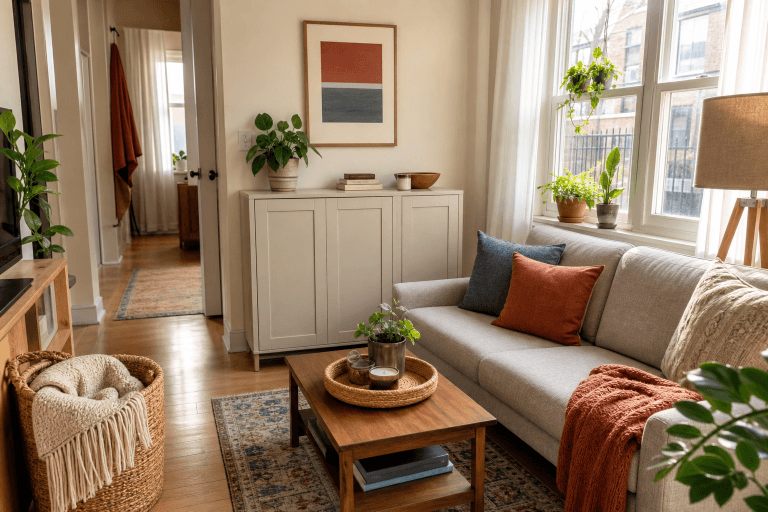
A small living room usually has more jobs than square footage. It may be the TV room, reading spot, guest area, work corner, play area, hobby table, dining backup, and the place where everyone drops things at the end of the day.
Organizing it well means accepting those jobs instead of pretending the room is only for sitting politely. The room needs clear paths, fewer homeless objects, and storage close to where clutter actually appears.
Name The Room’s Real Jobs
Write down what happens in the living room during a normal week. Watching TV, reading, working, eating, folding laundry, gaming, exercising, hosting, toys, crafts, or pet supplies may all show up.
Now choose the top three or four. A small living room can support several uses, but not every use needs equal space. The most frequent activities should get the easiest storage.
If a hobby happens once a month, it may not need a permanent basket beside the sofa. If work happens every day, a work box or drawer near the seat may be more useful than another decorative object.
Clear The Main Path Before Styling Anything
Before adjusting shelves or pillows, walk through the room. Move from the entry to the sofa, window, kitchen, hallway, or balcony door. Notice what catches your foot, hip, bag, or laundry basket.
Common path blockers include floor baskets, plant stands, side tables, toy bins, oversized coffee tables, and chairs kept for guests who rarely visit.
Remove one path blocker for a week. This is a simple test. If the room immediately feels easier, that item may need a new place or a smaller replacement.
Do not judge furniture only by whether it fits against a wall. Judge whether the room can be used without constant sidestepping.
Give The Coffee Table A Narrow Job
Coffee tables often become the visible junk drawer of a small living room. Remote controls, mugs, mail, chargers, books, snacks, and small tools gather because the table is convenient.
Clear it completely. Put back only what belongs to how the table is actually used. A tray can hold remotes and coasters. A lower shelf can hold the current book or a small basket. Dishes and mail should not live there.
If the coffee table stores too much, ask whether it is the wrong piece. A smaller table, nesting tables, or no table may work better in a very tight room. The right answer depends on the walking path and how people use the sofa.
Build Storage Around Activities
Living room storage works best when each activity has a home nearby.
Blankets need a basket, shelf, or ottoman. Remote controls need one small spot. Toys need a container that children can use without help. Exercise gear needs a corner, cabinet, or bin that does not block the room. Work items need a box or bag that closes.
Keep categories broad. A basket labeled “sofa stuff” in your head may be too vague. A basket for blankets is clearer. A box for current work tools is clearer. A bin for building toys is clearer.
If the room is shared, visible simple storage beats clever hidden storage that only one person understands.
Edit Open Shelves
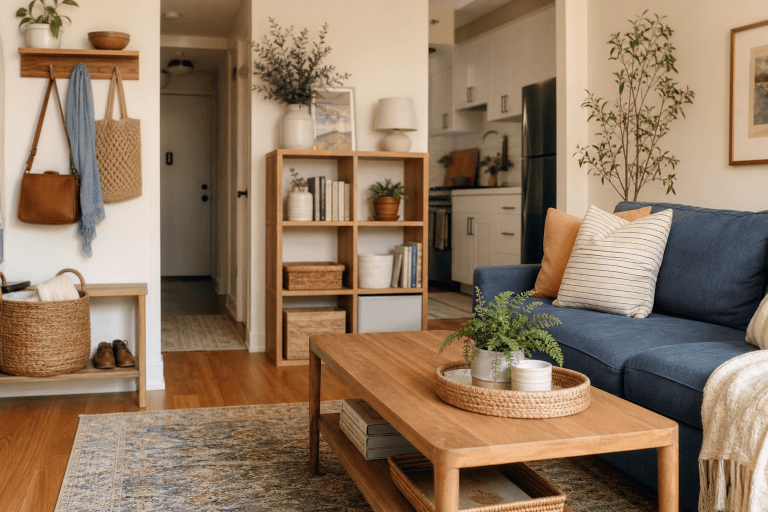
Open shelves can make a small living room feel lighter or busier. The difference is editing.
Remove everything from one shelf section. Put back books, decor, baskets, or daily items with space between them. Avoid filling every inch. Use closed baskets for practical items that are visually messy, such as cords, game controllers, craft supplies, or small toys.
Do not use open shelves as overflow for items from every room. A living room shelf with office paper, toiletries, snacks, tools, and decor will make the whole room feel unsettled.
Make A Reset Basket, Then Empty It
A belongs-elsewhere basket can help a living room reset quickly. Walk the room and collect items that belong in the bedroom, kitchen, bathroom, entry, or work area.
The basket only works if it is emptied before the reset ends. Otherwise it becomes a portable clutter bin.
For busy homes, use a ten-minute reset: clear dishes, collect laundry, return remotes, fold blankets, put toys or hobbies in their containers, and empty the belongs-elsewhere basket.
Hosting Without Permanent Guest Clutter
Small living rooms often keep too much for possible guests: extra chairs, extra pillows, spare blankets, serving trays, and games. Keep what is useful, but do not let occasional hosting crowd daily life.
Foldable chairs, stackable stools, or seating stored in another room may work better than a permanent chair that blocks the path. Extra blankets can live in a closet unless they are used weekly.
Daily comfort should come before rare scenarios.
When The Room Still Feels Busy
Look at the edges: floor, shelves, side tables, windowsills, and the top of cabinets. Small objects along every edge make a room feel crowded even when the center is clear.
Remove one visible category. Try fewer pillows, fewer shelf objects, fewer floor baskets, or fewer items on side tables. Live with the change for a few days before adding anything back.
More Help For Small Rooms
- Small Space Living: A Practical Guide to Making a Tiny Home Feel Bigger
- How to Use Vertical Storage Without Making a Room Feel Crowded
- Small Apartment Layout Ideas for Better Flow