Storage Ideas
How to Use Vertical Storage Without Making a Room Feel Crowded
Use shelves, hooks, rails, and tall storage in a small room without making the walls feel heavy or cluttered.
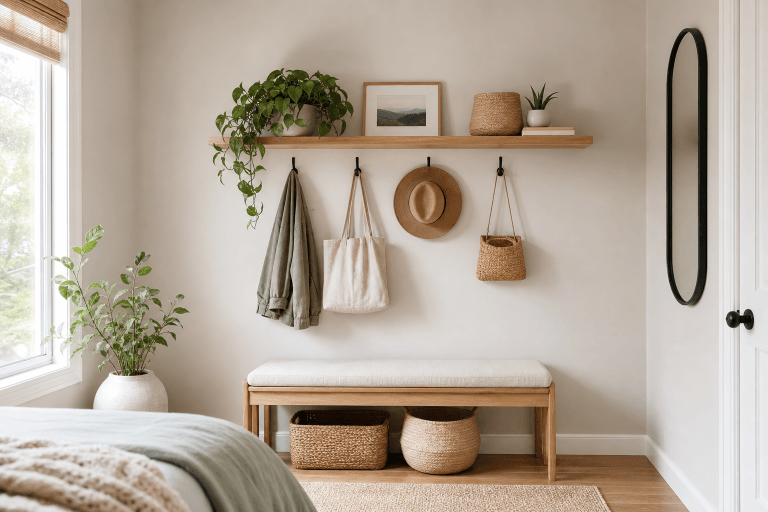
Vertical storage sounds like the obvious answer for a small room. If the floor is crowded, use the walls. That advice is useful, but only up to a point. A wall can become as cluttered as a counter when every inch holds hooks, shelves, rails, bags, baskets, and small objects.
The best vertical storage removes pressure from daily life while leaving enough blank space for the room to breathe. It should make the room easier to use, not louder to look at.
Use Height For A Specific Problem
Before adding a shelf or hook, name the problem. The room does not need “more storage” in general. It may need a place for bags near the entry, books near the bed, towels in the bathroom, spices near cooking, or office supplies near a desk.
Vertical storage works well when the item is light, used often, and easy to return. It works poorly when it becomes a display of unresolved categories.
Good uses include:
- hooks for daily bags or robes
- a narrow shelf for books in use
- a rail for lightweight kitchen tools
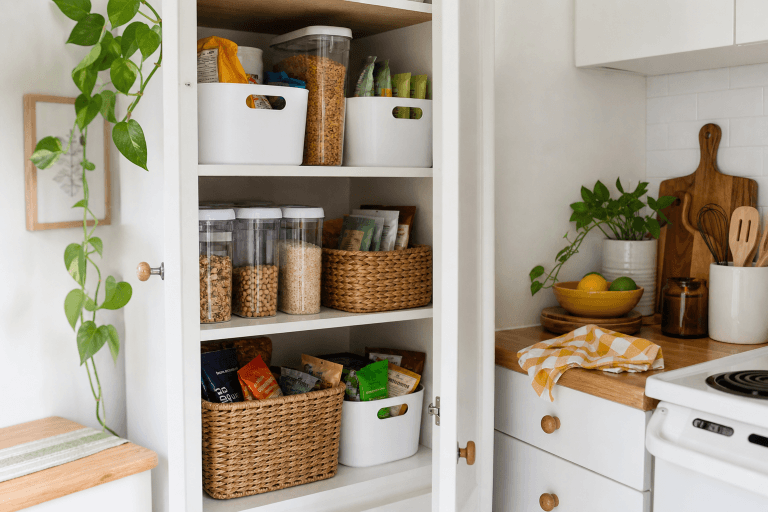
- a cabinet-door organizer for small supplies
- a tall bookcase for grouped categories
Avoid using vertical storage for heavy, fragile, or rarely used items in hard-to-reach places.
Keep The Most Visible Wall Edited
In a small room, the eye catches everything. If the most visible wall is packed, the room may feel crowded even when the floor is clear.
Choose one main vertical storage area per room. Let other walls stay quieter. A tall bookcase beside the sofa may be enough. A hook row at the entry may be enough. The wall does not need to solve every category.
Leave space around shelves and hooks. A little blank wall makes the storage look intentional rather than desperate.
Mix Open And Closed Storage
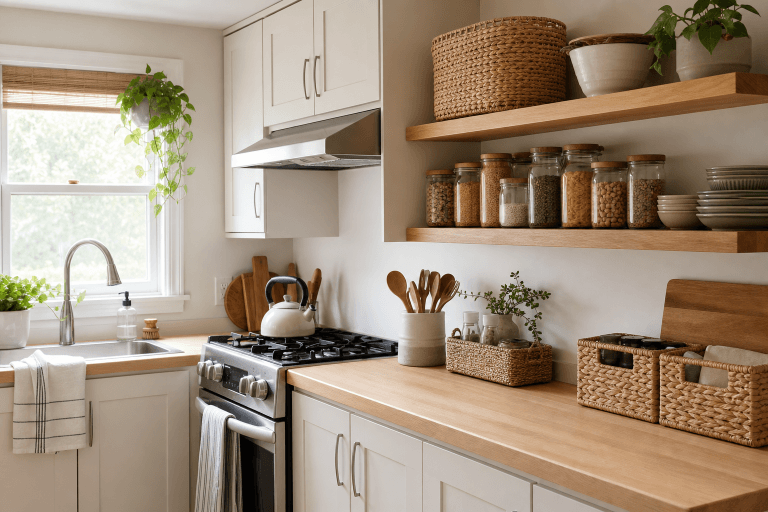
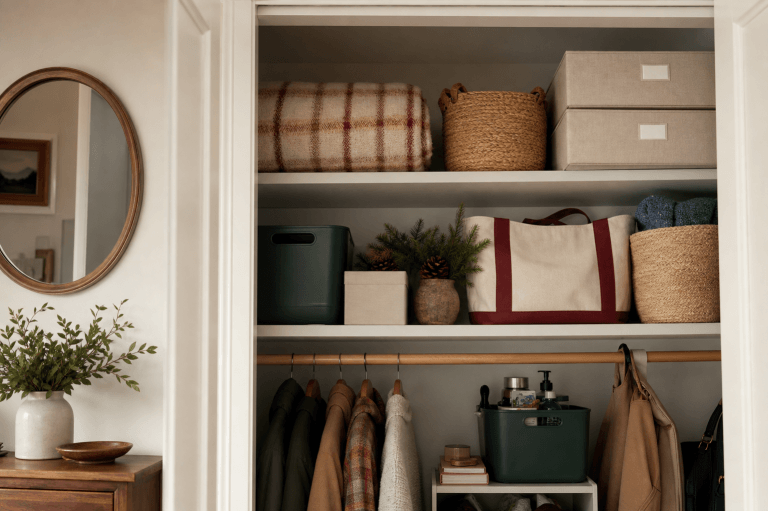
Open shelves are useful for items that look orderly without effort: books, folded towels, a few baskets, dishes used daily, or simple decor. Closed storage is better for mixed packaging, cords, toiletries, cleaning supplies, paperwork, and small loose items.
If an open shelf looks messy one day after organizing, the category probably needs a bin, box, or cabinet. Do not keep fighting the shelf.
Use open storage for what you want to see and closed storage for what you only need to find.
Watch The Depth
Wall storage can crowd a room even when it is off the floor. Deep shelves, bulky hanging organizers, and overfilled hooks can narrow a walkway or make a door feel tight.
Measure the depth of the storage and the space needed to move past it. Check door swings, closet doors, and drawers nearby. A shelf that looks slim online may still catch shoulders in a narrow hallway.
In tight rooms, shallow storage is often better: picture ledges, slim rails, narrow shelves, flat hooks, or tall cabinets with modest depth.
Put Daily Items At Reachable Heights
The easiest vertical space is between shoulder and waist height. Use it for items reached often. High shelves are better for occasional items. Low shelves can hold heavier categories if they do not block cleaning or walking.
Do not store daily items so high that you need a step stool every time. That kind of storage looks efficient but rarely stays tidy.
If several people use the room, place shared items where everyone can reach them comfortably.
Renter And Safety Checks
For renters, check the lease before drilling, mounting shelves, or using adhesive products. Follow weight ratings and installation instructions. Pay attention to wall type, moisture, heat, and the condition of paint or plaster.
When a storage idea feels uncertain, use freestanding pieces instead: a tall bookcase, ladder shelf, cabinet, cart, or wardrobe. If furniture could tip because of height, household members, pets, or local conditions, consider appropriate anchoring where allowed.
Do not hang heavy or fragile items over beds, sofas, cribs, or seating areas with temporary hardware.
A Simple Wall Edit
Pick one wall or door. Remove everything that is not used in that area. Group what remains by category. Put back the most useful items first. Stop before the storage is full.
If the room feels calmer with fewer items visible, keep the edit. If something missing is genuinely needed, add it back with a clear home.
Vertical storage should solve a daily problem quietly.
If the wall still feels busy, remove the smallest visible items first. Tiny objects create more visual noise than one larger basket or cabinet. Keep labels plain, turn packaging away from view, and group similar items together instead of scattering them across several shelves.
For a quick check, photograph the wall from the doorway. The photo often shows crowding that is easy to ignore in person.
Related Guides
- Renter-Friendly Wall Storage Ideas That Do Not Require Drilling
- Removable Storage Ideas for Renters Who Move Often
- Small Space Living: A Practical Guide to Making a Tiny Home Feel Bigger