Renter-Friendly Ideas
Renter-Friendly Wall Storage Ideas That Do Not Require Drilling
Add useful wall storage in a rental without drilling, with practical ideas for entries, kitchens, bathrooms, and work corners.
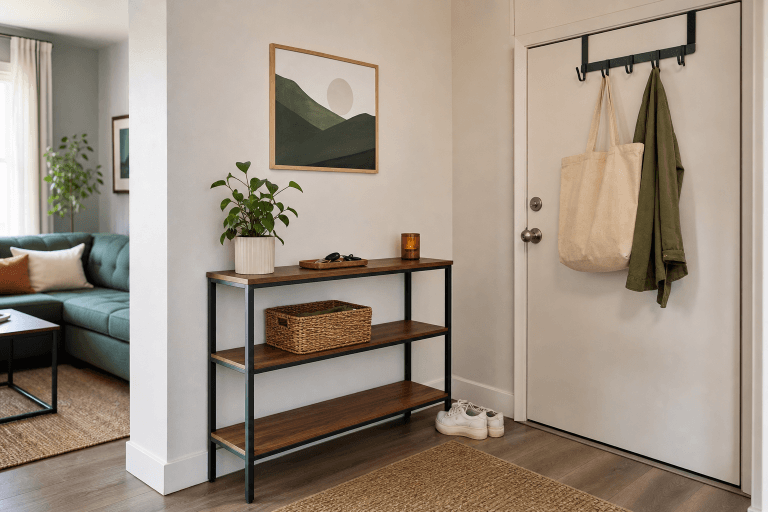
Wall storage is tempting in a rental because the floor is already doing too much. Shoes crowd the entry, towels have nowhere to dry, bags slide off chairs, and the kitchen counter becomes the place where every small item waits. Using the wall can help, but drilling is not always allowed, and not every adhesive hook deserves trust with your belongings.
The safest starting point is to treat wall storage as light-duty support, not a substitute for built-ins. Check your lease, read product instructions, and pay attention to surface type and weight limits. If a wall is textured, damp, freshly painted, crumbly, or unusually cold, temporary adhesive storage may not behave the way the package suggests.
This guide focuses on low-commitment options that solve daily clutter without making the rental harder to leave later.
Start With The Item, Not The Wall
Before adding hooks or shelves, choose the exact item that needs a home. “More wall storage” is too vague. “One place for the work bag near the door” is useful.
Walk through the apartment and list only the items that regularly land in the wrong place: keys, light jackets, tote bags, towels, oven mitts, headphones, cleaning cloths, reusable bags, or a robe. Then decide whether each item is light, used often, and reasonable to keep visible.
Good wall-storage candidates are usually:
- light enough for temporary solutions
- used daily or weekly
- awkward when stored in a drawer
- easy to return with one hand
- not fragile or dangerous if dropped
Heavy cookware, large mirrors, glass shelves, packed book storage, and anything above a bed or sofa need more caution. When in doubt, use furniture-based storage instead.
Use Door Space Before Blank Wall Space
Doors can add storage without changing the wall at all. The back of a bedroom door can hold a robe or next-day outfit. A closet door can hold scarves, belts, or lightweight accessories. A bathroom door can hold towels if it still opens and closes comfortably.
The trick is choosing one purpose per door. A door loaded with coats, bags, towels, and organizers can make the whole room feel crowded. It can also become annoying when the door no longer swings freely.
Try a simple door audit. Open and close the door fully. Notice whether it hits furniture, trim, hooks, or another door. Then choose the shallowest storage that solves the problem.
Over-door hooks are easiest when they hold soft, light items. Pocket organizers can work for accessories, but they often become dumping grounds for random items. Use them only when each pocket has a clear category.
Make Adhesive Hooks Look Intentional
Adhesive hooks are useful, but scattered hooks can make a rental look temporary. Placement matters.
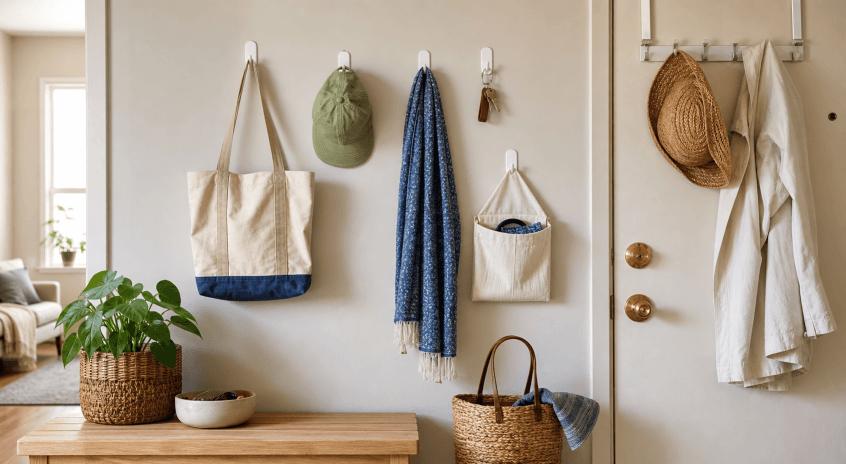
Line hooks up with something already in the room: the edge of a mirror, the height of a shelf, the side of a cabinet, or a door frame. Keep spacing even. Use fewer hooks than you think you need, then add only if the first set fills for a real reason.
Good places for adhesive hooks include:
- inside cabinet doors for measuring spoons or light tools
- near the entry for keys or one small bag
- beside the bed for headphones or a robe
- in the bathroom for a lightweight towel or toiletry bag
- near a desk for headphones or a small cable pouch
Follow the product’s surface preparation and removal directions. Avoid using adhesive hooks for heavy items, valuable items, or anything that would cause damage if it fell.
Use Furniture That Borrows Wall Height
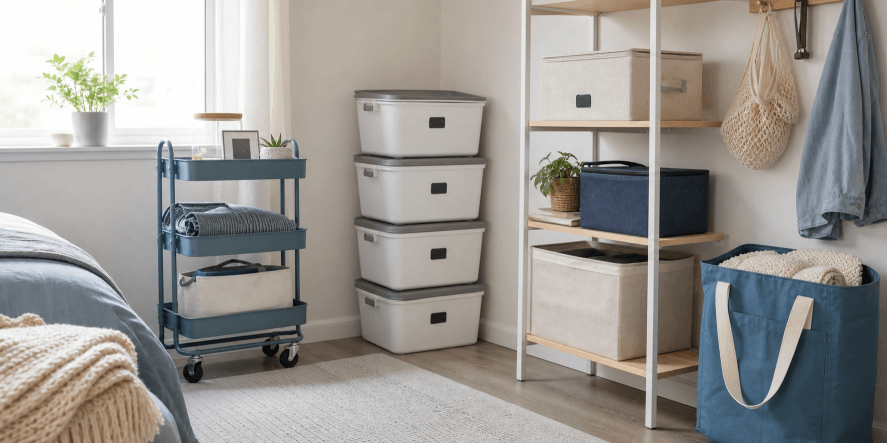
If the wall is not a good candidate for adhesive storage, use furniture that takes advantage of height without attaching much to the wall. A narrow bookcase, leaning shelf, ladder shelf, or tall cabinet can create the feeling of wall storage while staying movable.
Choose pieces with modest depth. In a small room, a deep shelf can steal as much comfort as a bulky dresser. Measure the walking path and door swing before bringing anything in.
Open shelves need editing. Use them for books, folded linens, baskets, plants, or attractive daily items. Put visually busy categories behind doors or inside bins. Leave some open space so the wall does not feel packed from floor to ceiling.
In homes with children, pets, uneven floors, or earthquake risk, consider whether furniture should be anchored. If anchoring is allowed, follow the manufacturer’s directions and the lease. If it is not allowed, choose lower, sturdier pieces and avoid top-heavy setups.
Look Inside Cabinets
The inside of a cabinet door is often better than a visible wall. It can hold lightweight kitchen tools, cleaning cloths, measuring spoons, hair tools that are fully cooled, or small bathroom items.
Keep inside-door storage shallow. If the organizer hits the shelf contents every time the door closes, it will become irritating quickly.
Try this before installing anything: tape a piece of paper where the organizer would go, close the door slowly, and check for contact. Then check whether the door can still open fully. This small rehearsal prevents a lot of awkward storage.
Match The Room To The Storage
In an entryway, wall storage should help you leave the house. That usually means keys, one daily bag, and current outerwear. Too many hooks invite too many items.
In a kitchen, wall storage should protect counters. A rail or hook area may help with oven mitts, a towel, or lightweight tools. Keep anything near heat, water, or food prep practical and easy to clean.
In a bathroom, moisture matters. Avoid paper labels, overloaded adhesive pieces, and storage that blocks ventilation. Keep daily items contained, and let towels dry fully.
In a work corner, wall storage should help the room become a home again after work. Headphones, a notebook, or a small pouch can hang nearby, while papers and electronics may need a box or drawer instead.
Mistakes To Avoid
The most common mistake is treating no-drill storage as no-limit storage. Temporary hooks and over-door organizers still have limits.
Another mistake is using the most visible wall for the messiest category. If the item is visually busy, put it behind a door, in a cabinet, or in a closed container when possible.
It is also easy to overbuy matching hooks before knowing the routine. Start with one problem area and let the system prove itself for a week.
Finally, do not ignore removal. A renter-friendly idea should work while you live there and leave as cleanly as possible when you move.
Read Next
- Removable Storage Ideas for Renters Who Move Often
- How to Use Vertical Storage Without Making a Room Feel Crowded
- Small Entryway Storage Ideas for Apartments Without Mudrooms