Renter-Friendly Ideas
Damage-Free Ways to Hang Everyday Items
Hang bags, towels, keys, and daily items in a rental without nails, screws, or permanent changes.
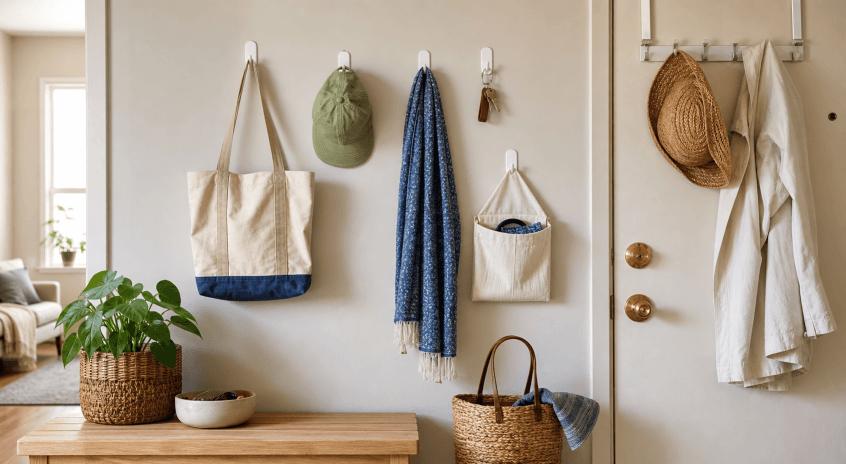
Everyday items need easy homes. Keys, towels, bags, robes, hats, headphones, and reusable totes are often dropped because the storage is too far away or hidden behind too many steps. Hanging can help, especially in a rental, but “damage-free” still needs care.
No removable product works on every wall, paint, door, or item weight. Check your lease, read product instructions, and avoid hanging anything heavy, fragile, valuable, or risky above beds, sofas, cribs, or seating areas unless the support is appropriate.
Use Existing Doors First
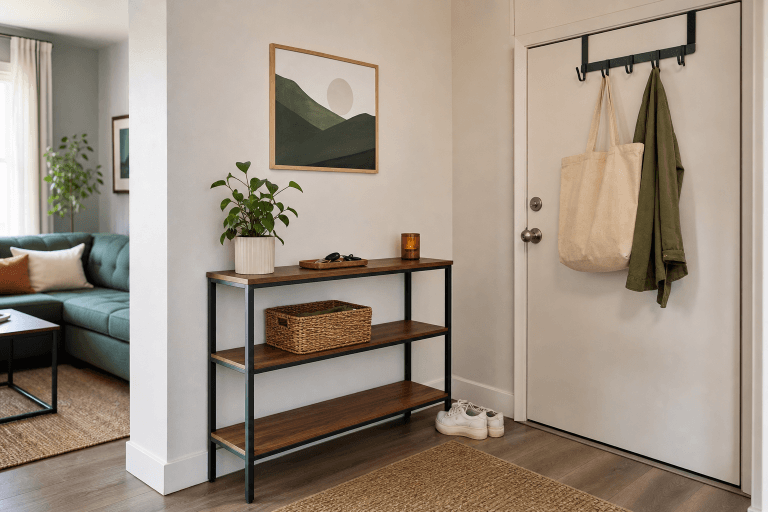
The easiest no-hole hanging spot is often a door. Over-door hooks can hold robes, towels, light jackets, or daily bags. They are useful in bedrooms, bathrooms, closets, and laundry corners.
Check that the door still closes, the hook does not scrape trim, and the item does not block movement. If the door becomes heavy or awkward, reduce the load.
Use one purpose per door when possible. A bathroom door for towels. A bedroom door for a robe. A closet door for light accessories. Too many categories make the room look crowded.
Try Cabinet Doors For Small Items
Inside cabinet doors can hold measuring spoons, cleaning cloths, hair accessories, small tools, or lightweight supplies. This keeps items close without filling visible walls.
Before attaching anything, check door clearance. Tape a piece of paper where the organizer would sit, then close the door slowly. If it hits shelves or contents, choose a different spot.
Avoid adding bulky organizers inside small cabinets. They can make storage more annoying.
Use Adhesive Hooks With Limits
Adhesive hooks are useful for keys, light bags, masks, headphones, small towels, or a robe, depending on the hook and surface. Follow the listed weight limit, surface preparation, and removal instructions.
Avoid textured, damp, dusty, or peeling surfaces. Bathroom humidity and kitchen grease can affect adhesion. If the item would be a problem if it fell, do not rely on a temporary hook.
Place hooks deliberately. Align them with a door frame, shelf, mirror, or cabinet edge so they look planned rather than scattered.
Consider Tension Rods
Tension rods can add hanging space inside cabinets, closets, windows, or between two sturdy surfaces. They can hold light curtains, cleaning cloths, spray bottles by their triggers when appropriate, or small accessories.
Use them lightly. A tension rod is not a closet rod for heavy coats unless it is designed and installed for that use. Check the surface and keep the load modest.
If a rod slips, remove weight rather than forcing it tighter against delicate surfaces.
Hang Near The Drop Point
Hanging only works when it is near the place items naturally land. Keys need to be near the door. A robe hook should be near the bed or bathroom. Towels should hang where they can dry. Headphones should hang near the desk.
Do not create a perfect hook system across the room from the habit. The item will keep landing where it always did.
Keep Visible Hooks Edited
Hooks are simple, but full hooks can become visual clutter. Leave one empty hook if possible. Remove items that are out of season, rarely used, or only hanging because the hook exists.
When a hook row fills, do not automatically add more hooks. First decide whether the category belongs there.
Remove With Patience
Damage-aware hanging is not only about installation. Removal matters too. Follow the product’s removal directions, work slowly, and avoid pulling adhesive pieces sharply away from delicate paint or plaster.
If a hook has been in place for a long time, check it before hanging anything new. Temporary storage still needs occasional attention.
Better Next Steps
- Renter-Friendly Wall Storage Ideas That Do Not Require Drilling
- Where to Put Things When You Have No Hall Closet
- Easy Ways to Hide Cords in a Rental