Small-Space Living
The One-In, One-Out Rule for Small Homes
Use the one-in, one-out rule to prevent clutter from building up in a small home or apartment.
The one-in, one-out rule sounds almost too simple: when one item comes into the home, one item leaves. In a small apartment, that small rule can do useful work because storage fills quietly. One extra mug, one tote bag, one sweater, one candle, one storage bin, and suddenly the cabinet that used to close easily needs pressure from both hands.
The rule is not about owning the fewest possible things. It is about noticing that every new item needs space, care, and a place to return.
Use The Rule By Category
One-in, one-out works best when the items match. A new sweater means one clothing item leaves. A new mug means one mug leaves. A new book means one book leaves or moves to a defined storage spot.
Do not use the rule loosely by removing any random item. Tossing an old receipt does not balance a new side table. The point is to keep categories from expanding beyond the space available.
Start with categories that already feel tight:
- mugs and glasses
- shoes
- coats
- books
- storage bins
- tote bags
- bedding
- hobby supplies
If the category has plenty of room, the rule can be relaxed. Small homes need judgment, not punishment.
Make The Exit Easy
The rule fails when leaving is harder than arriving. Create one donation box, one recycling spot, and one trash path. Keep them small and close enough that decisions do not become piles.
When a new item enters, choose the outgoing item within a day or two. If the decision waits for weeks, the rule becomes a slogan instead of a habit.
For items that need selling, be honest about time. If selling will not happen soon, donation may be more realistic. If an item is damaged, recycling or disposal may be the better path depending on local rules.
Try A Soft Version First
Some categories are emotional or expensive. Clothes, books, kitchen tools, and hobby supplies may not respond well to a strict rule right away.
Use a soft version: one-in, one-reviewed. When something new comes in, review the category and ask whether anything is ready to leave. If nothing is, choose a storage limit instead. For example, all scarves fit in one drawer, all craft paper fits in one box, all spare towels fit on one shelf.
Limits often feel better than constant removal.
Watch For Storage Creep
One sneaky version of clutter is buying storage for new clutter. A new basket may make the room look tidy, but it still takes space. Use one-in, one-out for organizers too.
Before buying a new bin, ask what category it will hold and where the bin will live. If there is no answer, the bin may become clutter with handles.
This matters most in closets, bathrooms, and entryways. A bin can hide overflow for a while, but it also makes the category harder to see. If the shelf was already too full, adding another container may only postpone the decision.
Use It At The Door
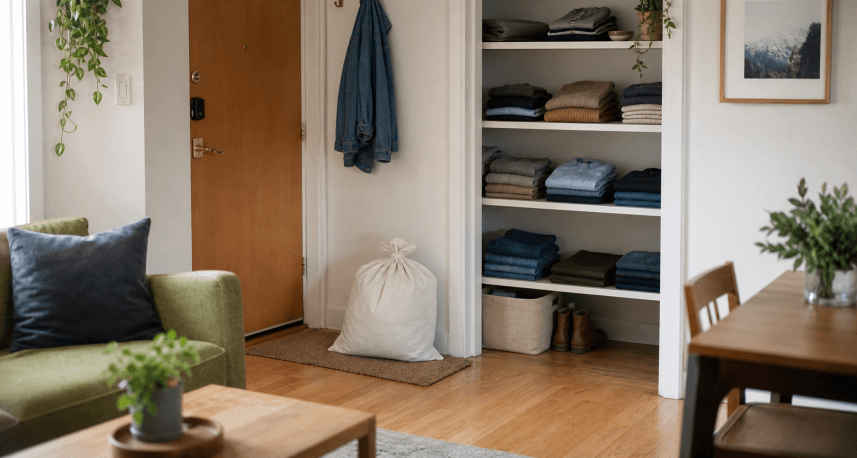
The easiest place to practice the rule is the entry. When a new bag, coat, pair of shoes, or umbrella comes in, check the entry category before it spreads. Small entries cannot hold unlimited “just for now” items.
Move off-season pieces away from the door and keep the visible area for current use. That keeps the rule practical instead of abstract.
A Five-Minute Monthly Check
Once a month, choose one category and check whether it still fits its assigned space. If mugs overflow the shelf, remove one or two. If shoes spread beyond the rack, reset the shoe limit. If books leave the shelf and stack on the floor, decide where the category ends.
Small homes stay calmer when categories have edges.
Keep Reading
- The Complete Decluttering Checklist for Apartments
- A Simple Donation Box Habit for Small Apartments
- How to Store Seasonal Items in a Small Home