Decluttering
A Simple Donation Box Habit for Small Apartments
Keep a small donation box at home to make decluttering easier, faster, and less emotionally draining.
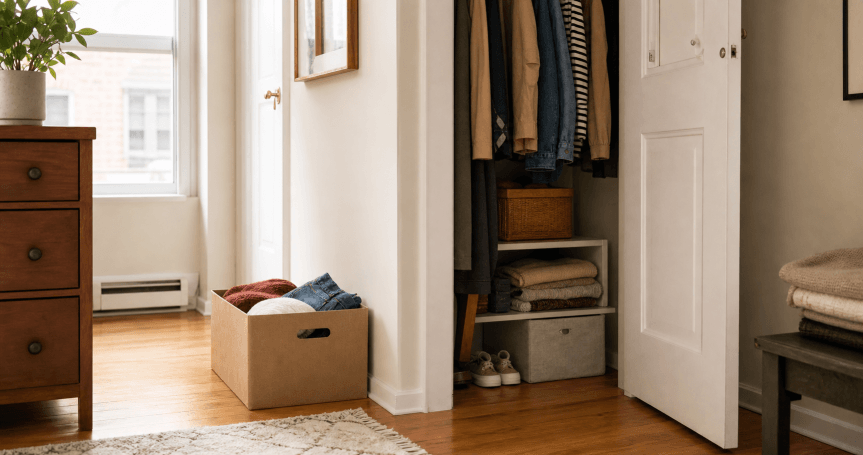
Decluttering gets harder when every decision has to happen during one big project. A donation box changes the pace. Instead of waiting for a free weekend, you create one small place for items that are ready to leave.
In a small apartment, the box has to be controlled. Too large, and it becomes another piece of clutter. Too hidden, and it gets forgotten. The habit works when the box is visible enough to use and limited enough to empty.
Choose A Small Container
Use one box, bag, basket, or bin. Keep it small enough to carry without effort. A large donation zone can sit for weeks and make the apartment feel unfinished.
Good locations include a closet floor, entry cabinet, laundry area, bedroom corner, or shelf near the door. Avoid the middle of a room unless the box is leaving soon.
Label it simply: donate. If the household needs more clarity, use “donate this month” or “leaving soon.”
Add Items During Normal Life
The donation box works best when decisions happen naturally. A shirt does not fit. A mug is never chosen. A book will not be read again. A decor item keeps moving from shelf to shelf. Put it in the box when the decision appears.
Do not turn every addition into a full decluttering session. The habit is small on purpose.
Useful donation-box categories include:
- clothes in good usable condition
- extra mugs or dishes
- books
- decor
- bags
- unopened household extras you will not use
- duplicate small items
Only donate items that are appropriate for donation. Damaged, unsafe, expired, or unusable items may need recycling or disposal instead.
Set An Emptying Rule
A donation box needs an exit rhythm. Empty it when it is full, once a month, before grocery day, or when running errands near a donation location.
Choose a rule tied to something that already happens. “When the box is full” works if the box is visible. “First Saturday of the month” works if you like calendar routines.
Do not let the box become storage for items you are afraid to decide about. If you keep taking something out, it may need a different decision.
Use A Maybe Box Separately
Donation and maybe should not be the same box. A donation box is for items already decided. A maybe box is for items that need time.
If unsure items go into the donation box, the whole box slows down. Keep maybe items in one small container with a review date. If the date comes and the item was not missed, the decision may be easier.
For Shared Homes
In a shared apartment, do not put someone else’s belongings in the donation box without agreement. Use the box for your own items or shared items everyone has decided to release.
If the box is shared, keep it in a neutral spot and make the rule clear. This prevents donation from feeling like disappearance.
When The Habit Works
The box is working when small decisions leave the home before they become a full project. The closet has a little more room. The shelf stops holding objects you never choose. The entry does not collect outgoing bags forever.
The habit is quiet, but small homes respond well to quiet habits.
Keep It From Becoming A Pile
Do not place extra bags around the donation box. If the box is full, the next step is removal, not expansion. A second bag may be fine on the day you are taking items out, but it should not become permanent storage.
If the donation area starts to bother you, that is useful information. The habit needs a smaller container, a clearer pickup routine, or a more visible exit date.
Keep Reading
- The Complete Decluttering Checklist for Apartments
- What to Declutter First When Your Whole Apartment Feels Overwhelming
- The One-In, One-Out Rule for Small Homes