Decluttering
Five Things to Remove from a Small Bedroom Today
Clear visual clutter from a small bedroom by removing five common items that make the room feel crowded.
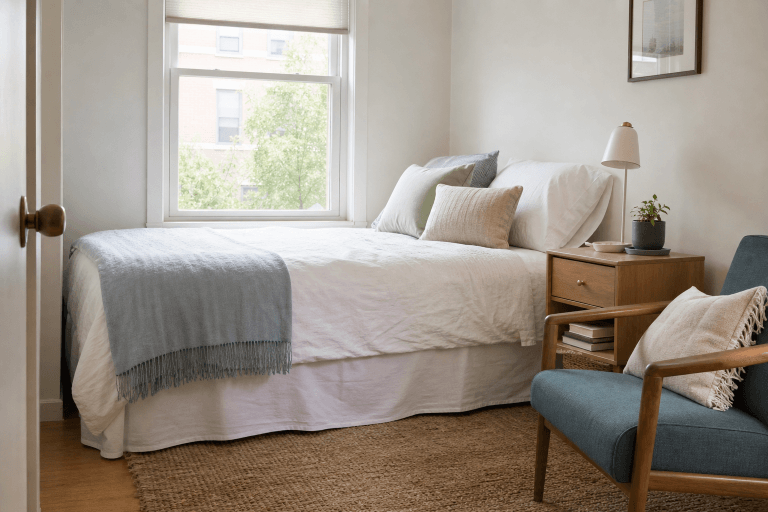
A small bedroom can feel crowded even when it is not truly dirty. The problem is often a handful of items that sit in the wrong place and make the room look unfinished: clothes on the chair, extras on the nightstand, bags on the floor, storage under the bed, and decor that leaves no quiet surface.
This is a quick reset, not a full bedroom makeover. Remove these five categories today and the room should become easier to enter, clean, and sleep in.
1. Clothes That Are Waiting For A Decision
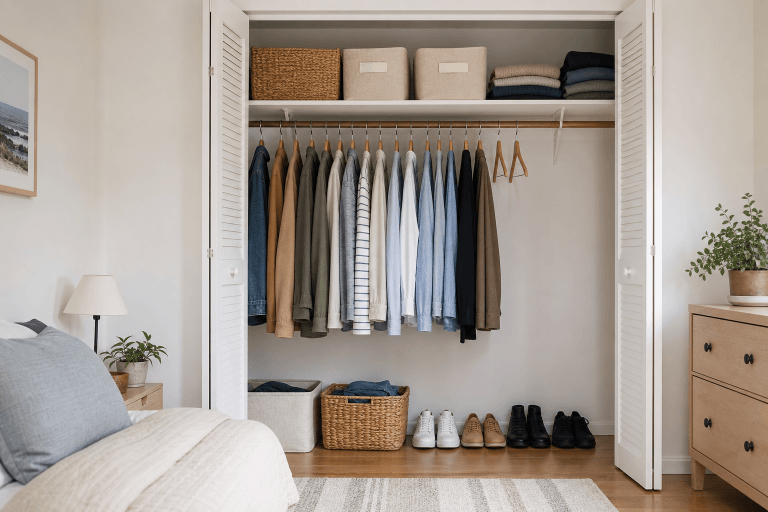
The bedroom chair, bench, bed corner, or floor often holds clothes that are not fully clean and not fully dirty. Give that category a small home before moving anything else.
Dirty clothes go to the hamper. Clean clothes go away. Rewear clothes get one hook, one basket, or one closet section. Keep the rewear spot small so it does not become a second closet.
If the pile returns quickly, move the hamper closer or make the rewear spot easier to use.
2. Extra Bedding That Makes The Bed Harder
Remove pillows, throws, and blankets that mostly end up on the floor. A small bedroom benefits from bedding that can be reset on a normal morning.
Keep the sleep setup comfortable, but avoid layers that require too much daily management. Store guest bedding, off-season blankets, or decorative extras in a closet or under-bed container if they are worth keeping.
The bed is the largest visual surface in the room. When it is simple, the whole room feels calmer.
3. Nightstand Drift
Take everything off the nightstand and put back only bedtime or morning items. That might be a lamp, water, glasses, charger, tissues, lip balm, and one current book.
Remove old cups, receipts, extra books, mail, skincare backups, hair accessories, and work items. If tiny items need to stay, use one small dish or tray.
A nightstand is not a storage unit. It is a support station for the edges of the day.
4. Bags And Boxes On The Floor
Shopping bags, returns, delivery boxes, luggage, and tote bags make a small bedroom feel like a storage corner. Remove anything that is not part of the room’s daily job.
Returns need an exit date. Empty boxes should be recycled if they are not needed. Tote bags can be folded into one container. Luggage should not hold random items unless it is clearly labeled and easy to access.
Floor space changes the feeling of the room quickly. Protect it.
5. Under-Bed Loose Items
Loose items under the bed are easy to ignore and hard to clean around. Pull out what you can reach. Keep only contained categories under the bed: off-season clothing, spare bedding, guest linens, or one labeled memory box.
If an item is used every week, under the bed may be too inconvenient. Move daily items to a drawer, shelf, hook, or basket where they can return easily.
Do not buy under-bed bins until you measure the clearance.
A Ten-Minute Finish
Once the five categories are handled, make the bed, clear the floor path, and remove dishes or trash. Stop before opening the closet. A visible reset is enough for today.
If the room still feels crowded, choose one surface tomorrow: dresser top, closet floor, or one drawer.
If You Only Remove One Thing
Choose the item that blocks movement. A bag beside the closet, a basket near the bed, or a pile of shoes by the door affects the room every time you walk through it.
Visual clutter matters, but blocked access matters more. A small bedroom feels better when drawers open, the bed can be made, and the floor beside the bed is clear enough to use without stepping around storage.
Keep Reading
- How to Organize a Small Bedroom Without Buying More Furniture
- Under-Bed Storage Ideas That Do Not Turn Into Hidden Clutter
- Nightstand Organization for Small Bedrooms