Small-Space Living
How to Make a Small Room Feel Less Busy
Reduce visual noise in a small room with simple changes to surfaces, colors, storage, and display areas.
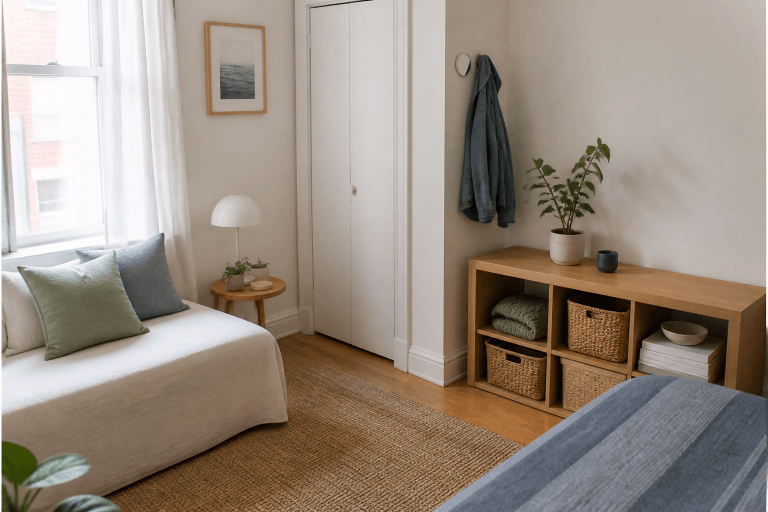
A small room can feel busy even when it is organized. The shelves are tidy, the baskets match, the furniture fits, and the floor is mostly clear. Still, the room feels visually loud.
That usually means the eye has too many places to stop: crowded surfaces, small objects spread across shelves, open storage full of packaging, several colors competing, or furniture edges breaking up the room.
The fix is not to remove all personality. It is to give the room fewer visual interruptions.
Clear One Sightline
Stand at the doorway and look across the room. What is the first cluttered line your eye follows? It may be the top of a dresser, a packed bookcase, a windowsill, the TV console, or the floor edge under furniture.
Clear that one sightline before touching the rest of the room. Remove small loose items, straighten cords, reduce stacks, and leave a little blank space.
One calm line can change the whole room more than organizing a hidden drawer.
Reduce Tiny Objects On Open Surfaces
Small objects create more visual noise than larger grouped items. Coins, hair ties, keys, receipts, chargers, lip balm, pens, and small decor can make a surface look busy even when each item is useful.
Use one dish, tray, drawer, or box for tiny items. Keep the container small. If it fills, empty it instead of upgrading to a larger one.
On display shelves, group small objects together or remove some entirely. A few larger shapes often feel calmer than many scattered small pieces.
Close Away Busy Categories
Some categories are useful but not restful to see: cords, toiletries, snacks, office supplies, cleaning cloths, craft materials, and mixed packaging.
Use closed bins, drawers, cabinets, or baskets for these categories. If storage must stay open, choose one container per category and keep labels simple.
Open storage works best for items that look orderly without effort: books, folded textiles, dishes, or a few decorative pieces.
Limit Competing Colors
A room can feel busy when many small items bring unrelated colors. This often happens with packaging, book spines, toy bins, toiletries, and office supplies.
You do not need a beige room. Just reduce the number of visible color sources. Turn packaging away, group books, use closed storage for mixed items, and keep textiles within a smaller color range.
Let one or two accent colors show instead of letting every category add its own palette.
Remove One Floor Item
Floor clutter makes a small room feel tighter. Even useful floor storage can add visual weight.
Remove one floor basket, stool, plant stand, or extra side table for a week. If the room feels easier, the item may not need to return. If it solves a real problem, try moving it to a less visible edge.
Clear floor space gives the room a calmer base.
Keep The Wall From Doing Too Much
Shelves, hooks, art, calendars, and wall organizers all compete for attention. Choose the wall’s main job. Is it storage, display, entry function, or work support?
If a wall has too many jobs, remove one. Leave blank space around the remaining items. Blank wall is not wasted space in a small room.
A Quick Photo Check
Take a photo from the doorway. The camera often shows visual clutter that becomes normal in person. Look for crowded edges, tiny items, crooked stacks, and overfilled shelves.
Edit one area, then stop. A room can feel less busy without being stripped bare.
If the photo looks calmer after one change, leave the room alone for a day before making another edit.
Keep Reading
- How to Use Vertical Storage Without Making a Room Feel Crowded
- Small Space Living: A Practical Guide to Making a Tiny Home Feel Bigger
- How to Organize a Small Living Room for Daily Life